by Michael McCarthy
By now, I’m sure you’ve seen the “9 albums” thing going around on social media. There’s a website called My 9 Albums where you can make an image showing nine album covers. It’s supposed to represent the nine albums that made you who you are, so to speak. For some people, that simply means their nine favorite albums. Other folks, like me, are doing something slightly different and choosing albums that we feel contributed to who we are as people. Or, at the very least, albums that shaped our musical tastes for life.
As soon as I made my first nine-albums image, I made another one. I’m someone with a pretty enormous music collection, and there are an awful lot of artists I consider favorites. Even making two of these, there are still many artists and albums I love that aren’t represented. But I tried to choose 18 that, taken together, give you a pretty good picture of my tastes in general.
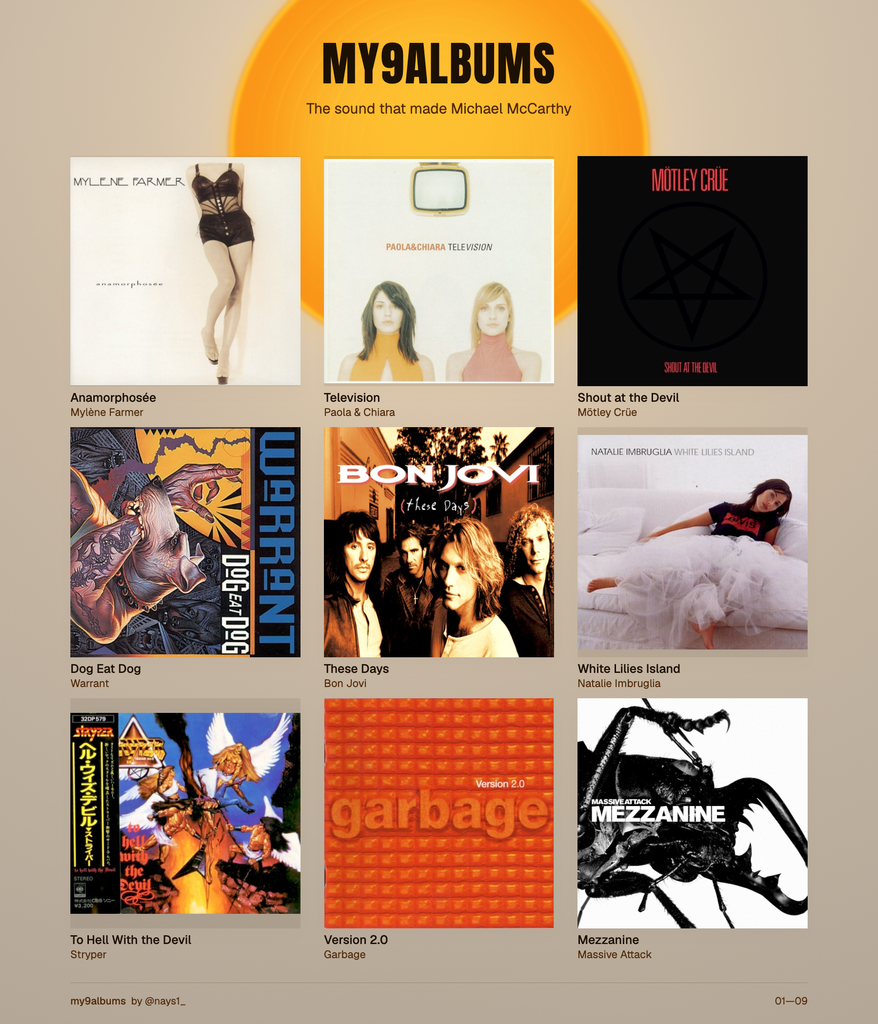
One thing I noticed after putting these together is how many of my choices aren’t the obvious albums. Some are among the most acclaimed records these artists ever made, but others are comparatively overlooked. Bon Jovi’s These Days, Def Leppard’s Slang, Warrant’s Dog Eat Dog, Natalie Imbruglia’s White Lilies Island and Kylie Minogue’s Impossible Princess are not necessarily the albums casual listeners would name as their favorites by these artists. And yet they’re the records I love most.
Maybe that says something about me: I’ve always been drawn to the albums where artists took a left turn, became more introspective, or made something that didn’t quite fit what people expected from them.
Rather than ranking these albums or reviewing them in the traditional sense, I’m going to explain why each one became part of my musical DNA.
Let’s start with Mylène Farmer’s Anamorphosée. I bought this French-language album in 1995 after finding it in the world music section at Tower Records on Newbury Street in Boston, where I was drawn in by its unusual cover and intriguing song titles. It wasn’t the first French album I purchased there — that would be Patricia Kaas’s excellent Dans Ma Chair — but it was the second, and it had an enormous impact on me.
As much as I loved Dans Ma Chair, it wasn’t going to make me hop on a plane to Paris to see Patricia Kaas in concert. (Eventually, I did see her live in Los Angeles, and she was amazing.) Mylène, however, I did get on a plane for. In 1999, I spent the entire month of September in Paris and attended all four of Mylène’s sold-out shows at the Bercy arena.
By then, she was promoting Innamoramento, another album I could easily have included here, but Anamorphosée was my introduction to Mylène’s spellbinding music, hence my choosing it. Interestingly, some fans in France were initially taken aback by the album because it leaned much more heavily into rock than her earlier work, particularly on songs like “Vertige” and “XXL.” She has released many albums since, but she has never really returned to that same guitar-driven sound.
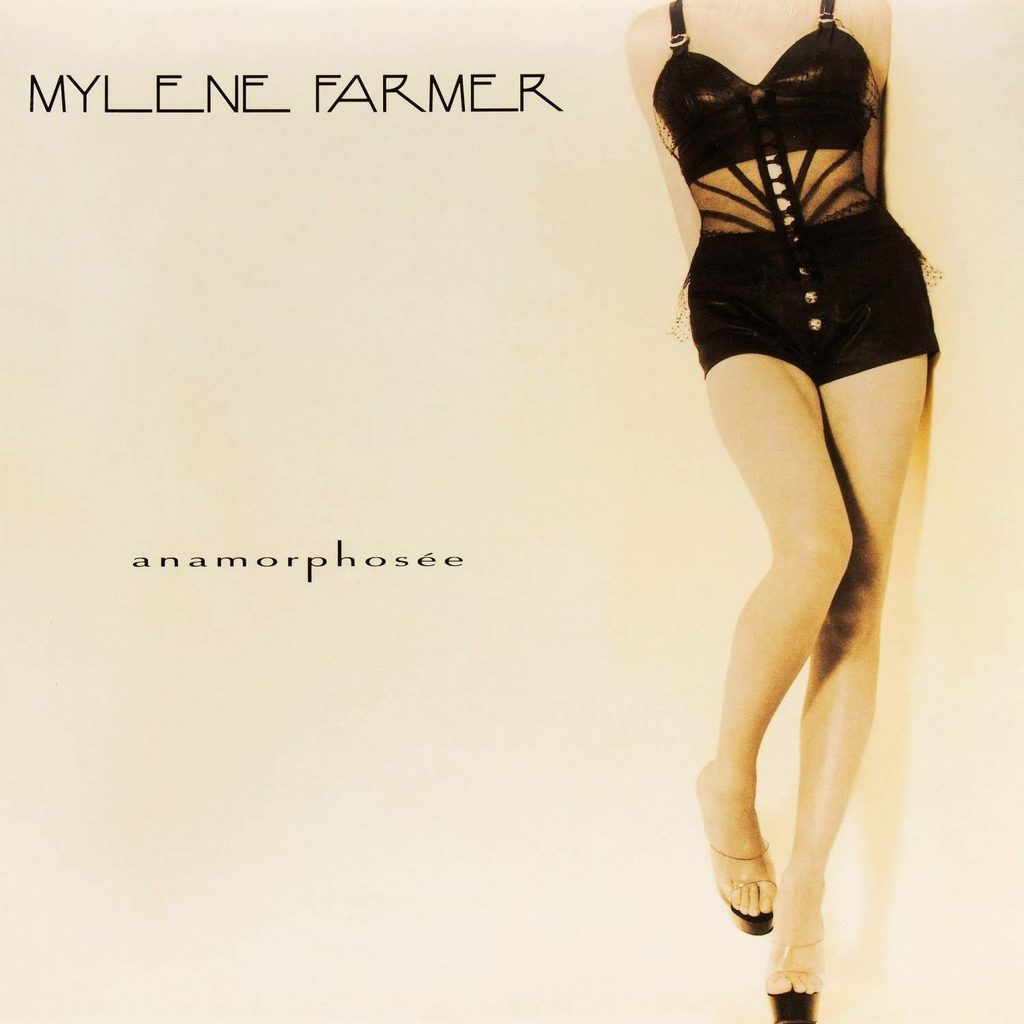
More importantly, Anamorphosée opened a door. After buying it, I took a deep dive into French music and began devouring as much of it as I possibly could. Mylène’s music also made me want to understand the language instead of simply looking up translations of the lyrics, so I eventually studied French at the Boston Language Institute. My newfound passion for French music soon led me to explore other sections of the world music department, which is where I discovered an Italian sister duo called Paola & Chiara.
The first Paola & Chiara album I bought was their colorful debut, Ci chiamano bambine, which I absolutely loved. That was followed by their wonderful second album, Giornata Storica, but it was album number three, Television, that I’m including here because it’s the one I’ve listened to the most from their catalog.
That September when I went to Paris to see Mylène Farmer, I almost hopped on a train to Italy to see Paola & Chiara, but I didn’t speak any Italian, so the language barrier ultimately dissuaded me. Looking back, I definitely regret not going.
The first two Paola & Chiara albums could easily be considered pop-rock, but Television was a radical departure into electronic pop. I remember the first time I listened to it, I was actually disappointed. It just wasn’t the Paola & Chiara I had fallen in love with a few years earlier. And yet, a few spins later, it was already my favorite Paola & Chiara album.

Television also has an interesting history because there are at least FOUR different versions of it. First came the original Italian version in 2000. Then there was a Spanish-language version the same year. After that came an edition with several of the songs recorded in English. And, as if that wasn’t enough, there was finally a 2001 edition on which some of the songs were remixed or entirely re-recorded.
And, yes, I own all four versions.
If you go on Spotify in the U.S., you’ll find the original Italian version and the 2001 edition. A couple of the songs on the latter are in Spanish, but most are in Italian. Shockingly, at least to me, the version containing several English-language songs isn’t available on Spotify in the United States, which I find kind of ridiculous.
That said, even if all four versions were available everywhere, I would still tell you to listen to the original Italian version first. If that edition hadn’t existed, none of the others would have followed, so that’s where I’d suggest you start.
And now for something completely different…
This brings us to the first album I ever bought with my own money, Mötley Crüe’s Shout at the Devil. I bought it on vinyl at a Sears department store in Lowell, Massachusetts, when I was 10 years old. I had a few other metal records before that — Ozzy’s Blizzard of Ozz and Quiet Riot’s Metal Health, for example — but those were records I asked for as Christmas gifts. Shout at the Devil was the first time I ever took money out of my own pocket and handed it over in exchange for music.
And that day is etched into my brain because when my dad and I got back to the car, the car wouldn’t start. Instead of calling a tow truck or getting someone to give him a jump start, my dad decided we should walk home.
And this was at least three miles.
To a 10-year-old, walking that far felt like it took eight hours. I don’t know how long it actually took, and we stopped and ate at George’s Italian Restaurant on the way, but I do remember it basically taking all day. We also had to walk over a certain bridge in Lowell that didn’t have a very high railing, and there were gaps where a kid could easily have fallen through, so I remember crossing that bridge and being absolutely terrified.
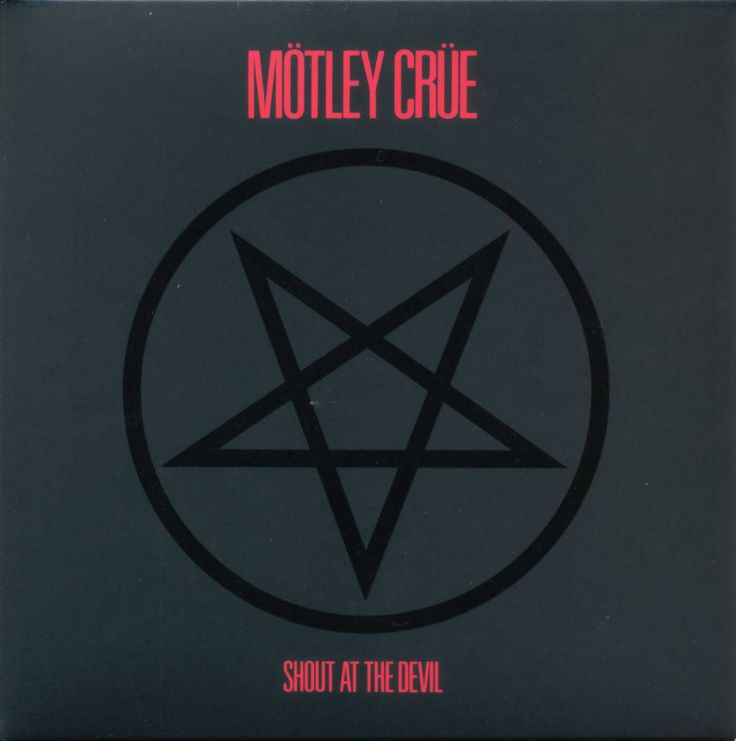
Then I got home and put on Shout at the Devil, and the spoken-word intro track, “In the Beginning,” scared the hell out of me. It was Nikki Sixx talking about an apocalyptic version of the world, but it might as well have been the devil’s voice coming out of that record. Totally scared the shit out of 10-year-old Mike.
But the songs… those kept me listening several times a day for months. And I still listen to the album today. I still think it’s Mötley Crüe’s best. (I’m a big fan of the record they did with John Corabi in 1994, but Shout remains my favorite.)
I really hope the band eventually does a tour where they play the whole album from start to finish. I wasn’t very impressed the one time I’ve seen them since John 5 joined the band, but if they did Shout from beginning to end, I would absolutely go see them again.
Next up is probably the most criminally underrated album in the entire heavy metal genre: Warrant’s somewhat dark magnum opus, Dog Eat Dog. If I were numbering the albums on this list, Dog Eat Dog would definitely be in the top three.
Most fans prefer Warrant’s debut or Cherry Pie, but Dog Eat Dog is the album that changed my life. Or, if it didn’t quite change my life, it was at least just about the only thing I listened to during the summer of 1992, when it was released. That summer, Nirvana and Pearl Jam were all over the radio, and I hated grunge music. (Eventually, it would start to grow on me.)
The beautiful thing about Dog Eat Dog was that it found Warrant doing darker and more experimental material without making a grunge-influenced album. It was simply more mature and introspective.
There were still sex songs — “Machine Gun” and “Bonfire,” for example — but there were also haunting ballads like “The Bitter Pill” and “Let It Rain.” One of my favorite tracks is “Andy Warhol Was Right,” which starts with a child singing the first verse. Essentially, it’s about someone who craves the spotlight so badly that they eventually grow up and kill someone famous. The phrase “Andy Warhol Was Right” never actually appears in the lyrics… and yet it was the perfect title for such a song.
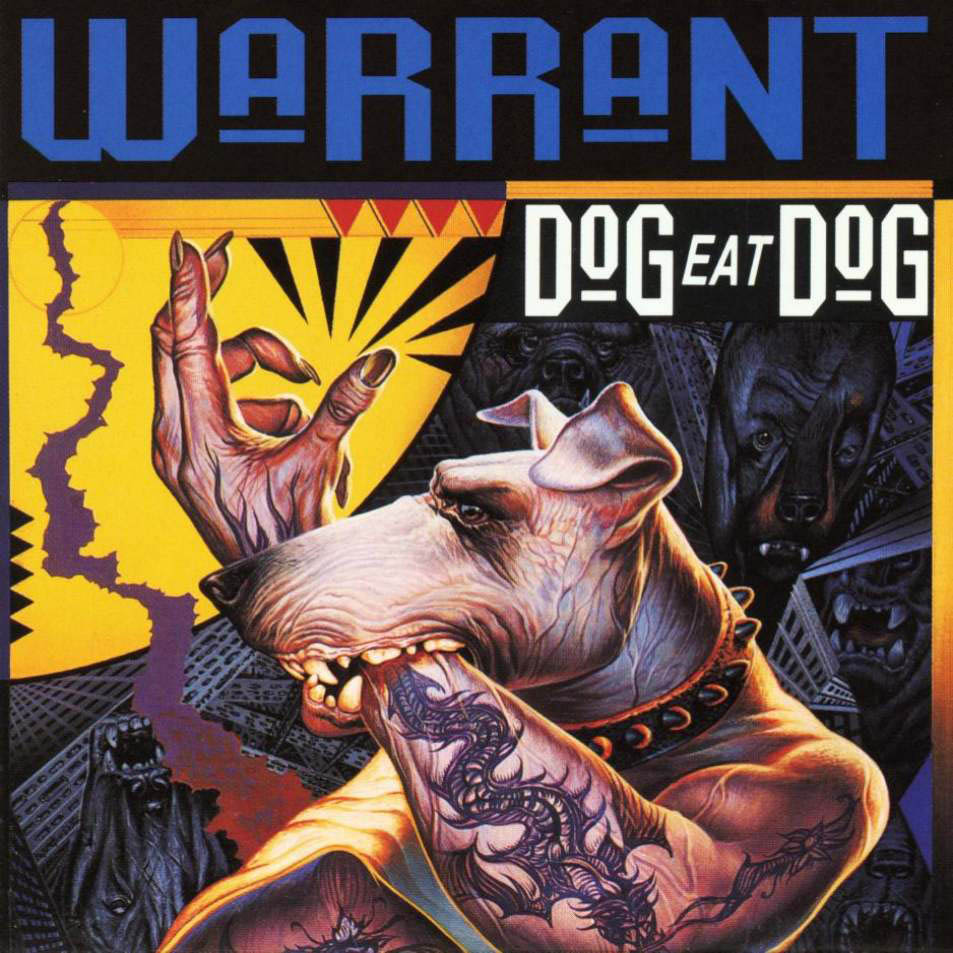
But if you want to hear the best song Jani Lane ever wrote, you have to listen to “The Bitter Pill.” Much more than your ordinary rock ballad, the song rises to such interesting heights that you could probably confuse it with Queen if you just heard an instrumental version. There’s even a crazy German verse in it.
And it’s probably the best ballad any “hair metal” artist ever wrote. Period.
This brings us to my favorite Bon Jovi album, 1995’s These Days, another record I would call criminally underrated. It’s Bon Jovi’s only grunge-era album, but it’s not a grunge album at all. That said, I actually think the grunge movement is part of what helped make this album so good.
Take the first song, “Hey God,” which finds Jon singing, “Hey God, Tell me what the hell is goin’ on / It seems like all the good shit’s gone / It keeps on gettin’ harder hangin’ on,” before wrapping up with, “I know how busy you must be / But hey, hey, hey, hey God / Do you ever think about me?”
I don’t know if Jon meant that their style of music was gone when he sang that, but I guess that’s how I took it. And yet I wonder if that song would even exist if it weren’t for grunge. I think the movement gave Jon and the guys permission to write about darker subject matter for a change.
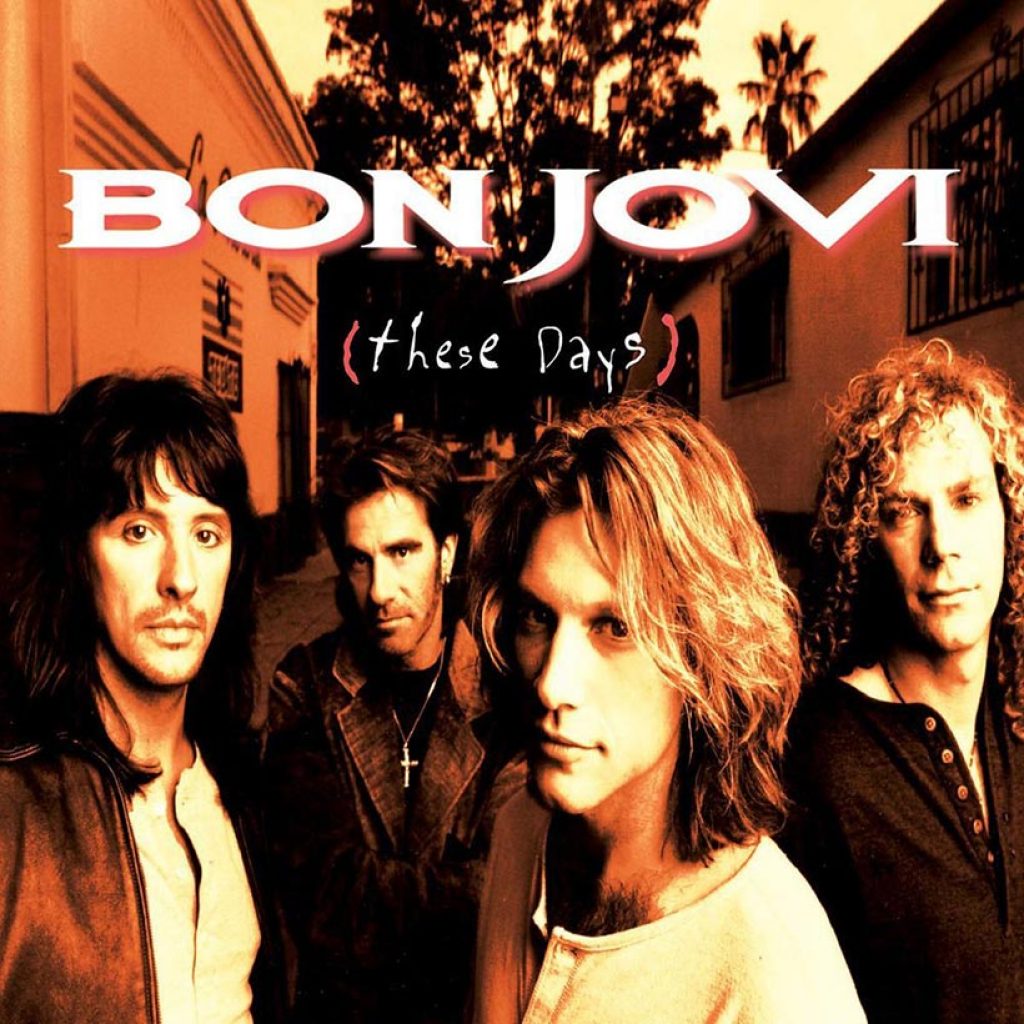
The greatest masterpiece on These Days is an unusual sort of ballad called “My Guitar Lies Bleeding in My Arms.” It was actually written when Jon and Richie Sambora had writer’s block, which is why it goes, “I can’t write a love song / the way I feel today.”
But it’s the band at their darkest and most introspective, and some days I still think it’s the best song Bon Jovi has ever released.
It’s really a shame that they don’t do it live. I was lucky enough to see them touring behind the album in 1995, when songs like “Hey God,” “These Days” and “This Ain’t a Love Song” were still a major part of the set, which probably makes it even more frustrating to see the album largely ignored at their U.S. shows now. During this summer’s tour, for example, they didn’t perform anything from These Days here in the States.
However, when they went to Europe they performed “Hey God” and the These Days title track, and the audiences ate them up. Then again, These Days was much more successful in Europe than it was in the U.S.
I should also mention that if you put a gun to my head and demanded that I name my favorite album of all time right now, it would be Bon Jovi’s These Days. The one album that sometimes rivals it for me is Butch Walker’s Letters. I’m only mentioning that one in passing because of the recent allegations surrounding Walker, and I don’t want this article to turn into a discussion of those. But I’d be lying if I pretended Letters hasn’t meant an enormous amount to me over the years.
OK, time for one album that isn’t rock or hard rock: Natalie Imbruglia’s sophomore album, White Lilies Island, another underrated record. It wasn’t an outright flop in the U.S. — it actually reached No. 35 on the Billboard 200 — but compared with the massive success of Left of the Middle, it seemed to disappear almost immediately here. In the UK, where “That Day” reached No. 11 and the album hit No. 15, Natalie remained much more visible.
In any case, White Lilies Island remains my favorite Natalie Imbruglia album even today, though I will say that I highly recommend her just-released new album, Algorithm.
Although I love every song on White Lilies, it’s easy to name my favorite: the haunting ballad “Goodbye,” easily one of the best songs any artist has ever written about depression. It begins, “Everyday’s the same, I feel them merge / I try to separate, resist the urge / But they tell me I’ll be fine / That it will all get better / Just try to write it down / Or put it in a letter,” then arrives at the chorus: “But the words won’t play / And there’s no easy way to say / Goodbye, goodbye.”
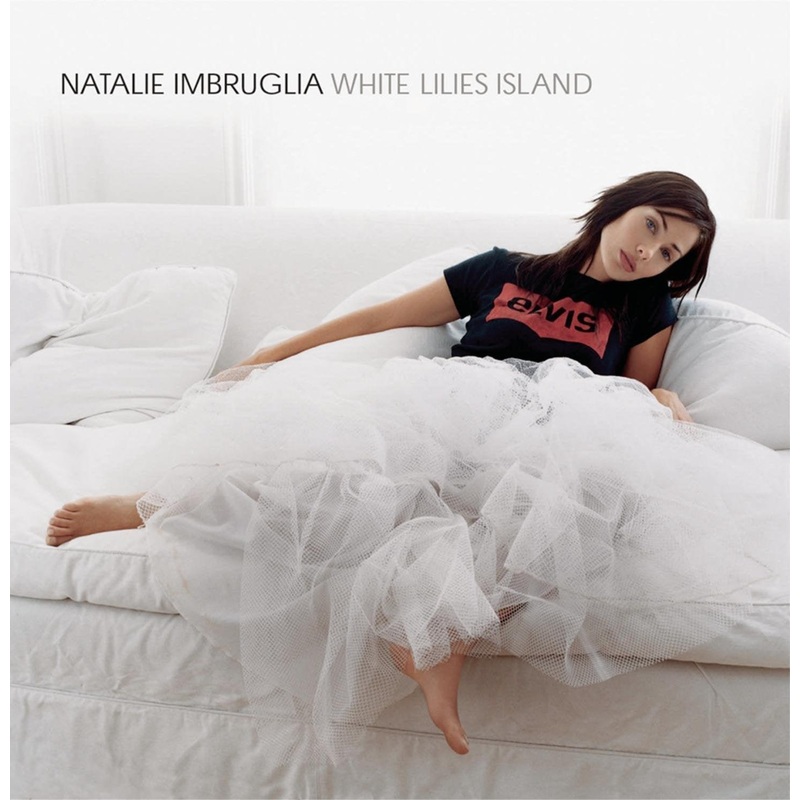
I don’t know if the song is supposed to be about suicide at all, but it’s hard not to think that it is when you listen to it. I think part of the reason I love it so much is that I’m a writer and I tend to process my depression by writing things down. But if you like melancholic songs, you have to hear this one at least once in your lifetime, even if you’re not a writer at all.
Another thing I love about White Lilies Island is that not all of the lyrics immediately make sense. Take “Beauty on the Fire,” for example. The chorus goes, “Tonight, could I be lost forever / To drown my soul in Sensory Pleasure?” The title comes from the first verse: “Here it comes again / Cannot outrun my desire / Cover my descent / And throw the beauty on the fire.”
I’m still not entirely sure what she meant by that, but that’s actually part of the reason I love the song so much. I remember listening to it every day for months during one period when I was anorexic. I’m not saying the song actually has anything to do with eating disorders, but at least during one particular summer, for me, it did.
Just when you thought I was done with hard rock, there’s one other metal album among these nine: Stryper’s To Hell with the Devil. I’m sure my friend Michael Sweet would very much love for me to name one of the newer Stryper albums here, and I do love their more recent material, but To Hell with the Devil still rises above the others for one particular reason: the songs are incredibly catchy.
“Calling on You” and “Free,” for example, are massive earworms that get inside your head and stay there. That’s the one thing I sometimes miss on Stryper’s newer albums: those infectious, almost radio-friendly singles of their heyday.
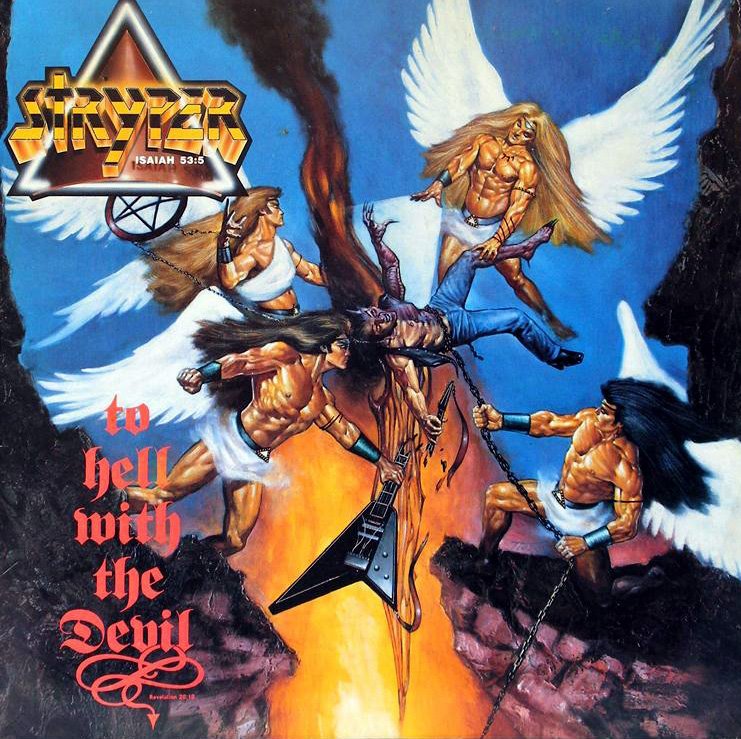
But To Hell with the Devil isn’t just pop-metal hooks. Songs like the title track and “The Way” are very, very heavy and can stand alongside what much heavier bands were doing at the time.
I also have to admit that I found Stryper’s Christian lyrics refreshing when I first discovered them in the ’80s. So many bands were singing about sex and partying that I was starting to get burned out on all of that. Then bands like Stryper, Barren Cross and Mass came along, and their music was just so refreshingly… positive.
Even if I wasn’t specifically looking for songs of a religious nature, I still appreciated their outlook.
Now it’s time for some Garbage.
Garbage has been one of my favorite bands ever since Nikki Sixx of Mötley Crüe told me to check out their debut album shortly after it was released and I immediately fell in love with it. Honestly, I love every album Garbage has ever made, but Version 2.0 is my favorite.
When I listened to their debut album, it would sometimes make me think of Blondie, and that made me wonder what Garbage would sound like if they leaned slightly more in the pop direction. Then Version 2.0 came out, and it was basically the album I’d been hoping for.
If I had been their manager or something, that album came out exactly how I would have wanted it to sound. It was perfect and, for me, it felt like a dream come true.
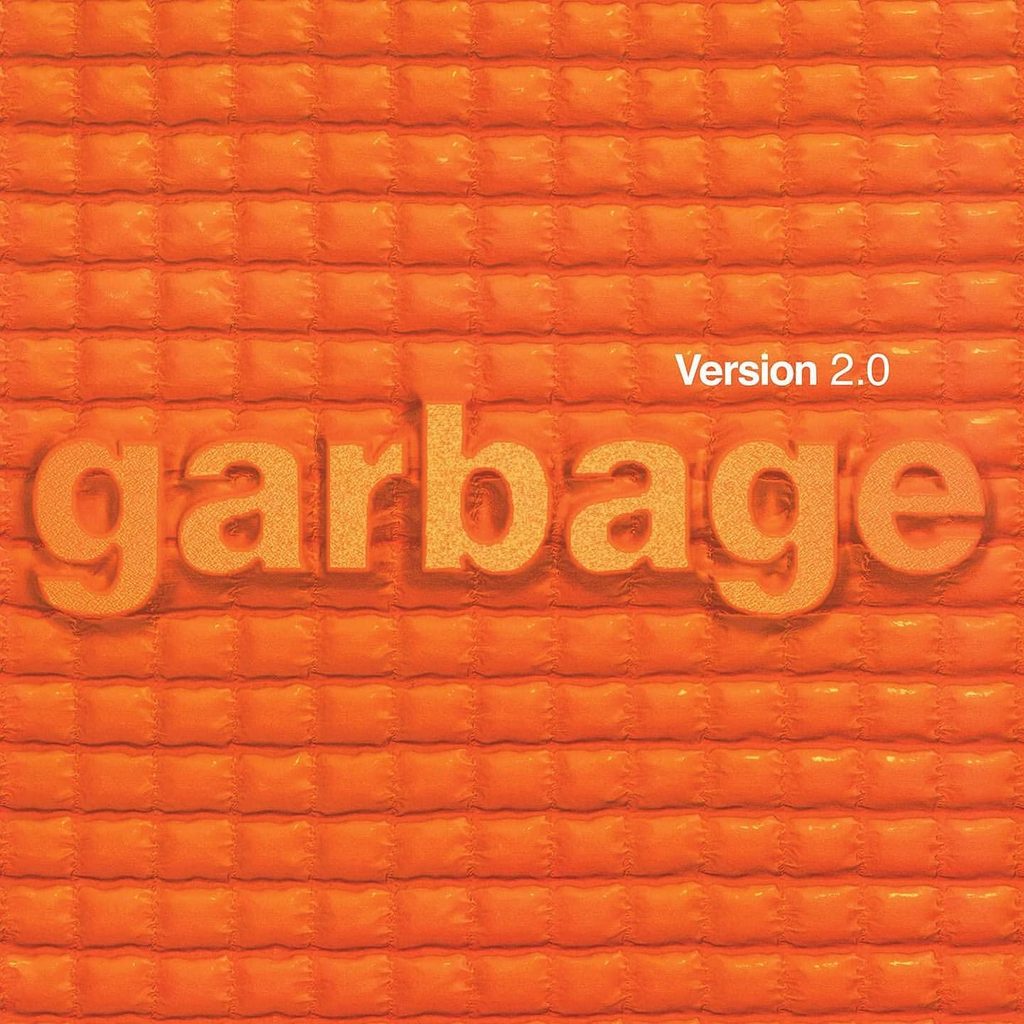
And Version 2.0 is such a brilliant album. Even if you’ve listened to it 1,000 times, you still might discover sounds buried deep in the mixes that you never noticed before. It’s incredibly layered and intricate. I don’t know how many tracks the average song on the album had, but if I had to guess, I’d probably say about 50 because there’s so much going on.
My favorite songs are “Temptation Waits,” “Special,” “When I Grow Up,” “Medication,” “The Trick Is to Keep Breathing” and “You Look So Fine.” All of those were singles except for “Temptation Waits.”
And I still can’t wrap my head around how that song was never a single because it’s certainly catchy enough that it could have been a hit. They obviously felt strongly about it, too, or it wouldn’t have been the first song on the album.
Finally, we have Massive Attack’s Mezzanine, which is my favorite Massive Attack album by far. I like their other records as well, but Mezzanine is the one I keep going back to again and again.
My only very minor complaint would be that it seems a little front-loaded because, in my opinion, the three best songs on the album are the first three: “Angel,” “Rising Son” and “Teardrop.”
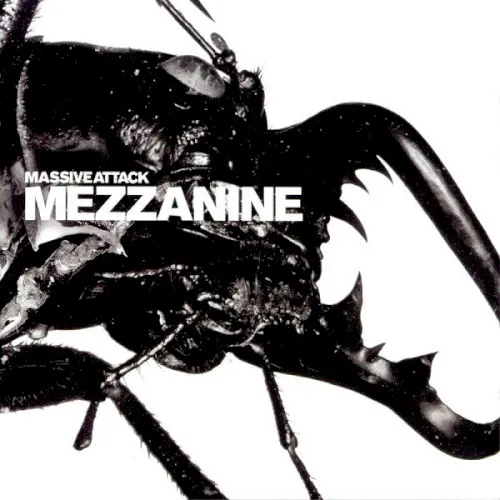
In any case, Mezzanine is quite possibly the best trip-hop album ever made. And the production is immaculate. Like Garbage’s Version 2.0, Mezzanine has layer upon layer of sound, and even now, almost 30 years later, it still sounds modern.
Actually, you could go one step further and say it sounds futuristic.
Back when the album was new, I kept finding myself hoping other artists would hear it and start making trip-hop records because I desperately wanted more music like that. Of course, I’ve enjoyed the albums Massive Attack made afterward, but I still think Mezzanine is their magnum opus.
These are the first nine albums that made me. I’ll be back with another nine soon enough. Even limiting myself to 18 albums was difficult because I have so many favorites.
Hell, give me an hour and I could easily write a list of 100 albums that made me.
Don’t dare me.
Leave a Reply