
by Michael McCarthy
First of all, in case you’ve read the subject line too quickly, I would like to state again that this review contains major spoilers about the Apple TV series Silo. It is not my intention for people who’ve never seen the show to read this. Rather, my goal is simply to discuss my thoughts about the series, particularly the recently concluded third season, partially because I’m actually curious to hear what other people think.
To that end, I would love it if you would comment on this post. But do me a favor—if you’ve read the series of books by Hugh Howey, please do not post spoilers. Many people have not read the novels and would prefer to learn the answers to the show’s many mysteries from watching the show, not from a comment by someone who’s read the books and already knows everything.
That said, it wouldn’t be a proper review if I didn’t first summarize the show a bit. So…
Silo takes place at an unspecified point in the future, when roughly 10,000 people live in a massive underground silo extending more than 100 levels beneath the Earth’s surface. As far as its inhabitants have been taught, the outside world is toxic and uninhabitable, and leaving the silo means almost certain death. Exactly what happened to the world, who built the silo, how long humanity has been living underground and whether virtually anything the residents have been told is actually true are among the many mysteries the series has slowly unraveled over its first three seasons.

Based on Howey’s series of novels and developed for television by Graham Yost, Silo stars an excellent Rebecca Ferguson as Juliette Nichols, a brilliant engineer whose determination to uncover the truth gradually exposes secrets about the silo that its leaders will go to extraordinary lengths to protect. What begins as a murder mystery ultimately expands into something much larger, as Juliette—and the audience—discovers that her silo is only one small part of a much bigger system whose true purpose remains frustratingly unclear. And “frustratingly” is becoming the operative word for me.
Don’t get me wrong: I like Silo. Most of the time, I actually love it. I’ve spent three seasons trying to figure out its mysteries, becoming invested in its characters and eagerly awaiting each new revelation. But Silo has developed an increasingly irritating habit: every time it answers one question, it seems to ask two or three more. Much like Lost or The X-Files, the constant introduction of new mysteries can grate on your nerves after a while.
If you’ve seen the movie or series Snowpiercer, some aspects of Silo will immediately feel familiar. Both take place in closed societies built to preserve humanity after the outside world has become uninhabitable, and both have developed rigid class systems that are reflected in their physical geography. In Snowpiercer, the wealthiest and most powerful passengers live toward the front of the train while the poorest are relegated to the back. Silo essentially turns that structure on its side: political and institutional power is concentrated toward the upper levels, while the people in Mechanical live at the very bottom, performing the difficult work necessary to keep everyone above them alive.
The silo even has the outward appearance of a functioning civic government, complete with a mayor, sheriff, Judicial department, elections and a detailed body of laws known as the Pact. But the deeper Juliette digs, the clearer it becomes that this isn’t much of a democracy at all. Information is tightly controlled, surveillance is pervasive, pieces of the past are forbidden, and people who threaten the established order have a tendency to disappear—or get sent outside to “clean” the sole video camera through which the residents of the silo see the outside world.
Like Snowpiercer, Silo eventually asks what happens when the people maintaining an unequal system stop accepting the explanation they’ve been given for why that system is necessary. Not surprisingly, the answer in both shows is rebellion. I wouldn’t call Silo a Snowpiercer rip-off by any means, but if you’ve watched the latter, you’ll probably understand the basic social dynamics of the former very quickly.

When Season 3 begins, three months have passed since the rebellion that nearly tore Silo 18 apart. Juliette, now regarded as a hero by much of the population, has improbably become mayor, while Paul Billings (Chinaza Uche) remains sheriff. But Juliette is suffering from severe memory loss and is largely a figurehead. The real power rests with husband-and-wife Robert and Camille Sims (Common and Alexandria Riley, who are both fantastic). Robert, who had been former mayor Bernard Holland’s ruthless enforcer, is pulling strings behind the scenes, while Camille has taken over Bernard’s old position as head of IT and is secretly administering drugs intended to suppress Juliette’s memories. And before long, she’s adding “vitamin D,” which is actually a “forgetting drug,” to the entire silo’s water supply.
And don’t let that rather mundane title fool you. IT is far more than the silo’s computer department. It controls much of the technology and information that keeps the silo functioning, and its leadership has access to secrets about the silo’s true nature that are deliberately kept from most residents—and even much of the government. As Bernard demonstrated during the first two seasons, the head of IT can wield considerably more real power than the silo’s supposedly more important elected officials.
For most of the first two seasons, IT was run by Bernard Holland, played wonderfully by Tim Robbins. Bernard gradually emerged as one of the show’s most powerful and intimidating characters, eventually becoming mayor while continuing to run IT. But I actually found him most interesting this season, after his power had been stripped away. Badly injured and no longer in control of virtually everything around him, Bernard became a much more sympathetic character and finally seemed to show us a kinder, more human side of himself. Robbins was especially good at portraying this weakened, fallen version of a man who had once seemed almost untouchable.
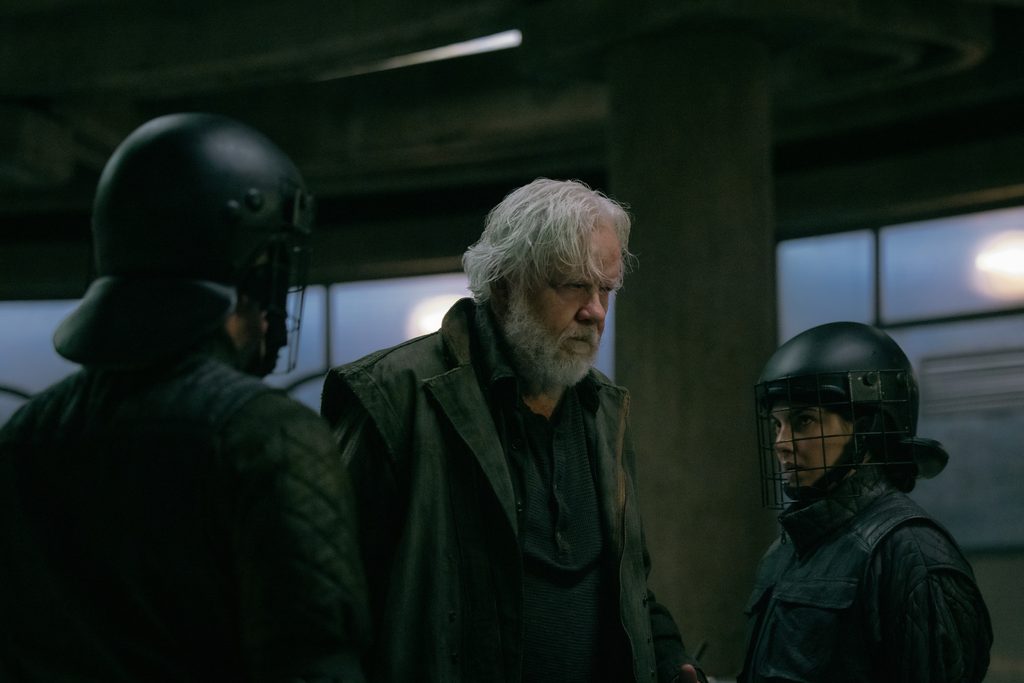
Bernard’s trajectory also demonstrates something important about how power works in Silo. The head of IT can wield considerably more real power than the silo’s supposedly more important elected officials. One thing you learn pretty quickly is that there are essentially two governments. There’s the government the residents can see—mayor, sheriff, Judicial, the Pact—and then there’s the deeper machinery of control they aren’t supposed to know exists. IT sits right at the intersection of those two worlds.
Accordingly, Camille becomes arguably the most powerful person in Silo 18 during Season 3, which eventually puts her deeply at odds with her husband. But Camille doesn’t have nearly as much power or knowledge as she would like to think because even she answers to “the Algorithm,” a mysterious voice that seems to enjoy giving commands.
During Seasons 1 and 2, I was convinced the Algorithm was an AI. But Season 3 reveals that there are actual human beings behind it, including Dr. Victor Crnkovich (Matt Craven), whose voice is being disguised. Unfortunately, Victor often comes across as incredibly cruel. At one point, he decides to enact the “Safeguard Procedure,” which is an Orwellian-sounding name for a system capable of exterminating everyone in Silo 18 by releasing poison into it.
Mechanical engineers Knox (Shane McRae) and Shirley (Remmie Milner) race to clamp the pipe shut and ultimately succeed. And I was happy about that, obviously, because I didn’t particularly want all of these characters I love to perish. (Kudos to McRae and Milner, arguably the series’ most under-rated stars.)
The Safeguard storyline is actually one of the things Season 3 handled very well because it gives us something this show doesn’t always give us: a resolution. There’s a very real threat to the characters, overcoming it is difficult, which contributes to the suspense, and then the characters successfully prevent it. Had the show ended without resolving that and left us wondering whether everybody in Silo 18 was about to be poisoned, I’m sure there would be a lot of very angry viewers right now.
That said, there are plenty of other things to be irritated about…
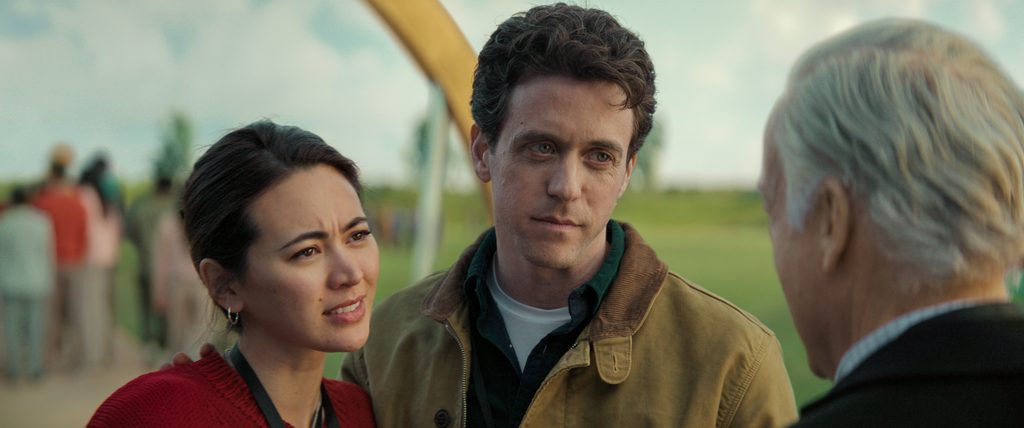
Season 3 also spends a considerable amount of time in the “Before Times,” centuries before the events in Silo 18, following Congressman Daniel Keene (Ashley Zukerman) and journalist Helen Drew (Jessica Henwick). Eventually, they’re courted by Per Stenson, the richest man in the world, played by Colin Hanks as a frighteningly Elon Musk-like tech mogul who wants them involved with the development of the silos. But both decline. Three years later, however, Daniel and a now-pregnant Helen return for the unveiling of the silo project. Daniel is brought to Silo 1 while Helen tours Silo 18, and then a nuclear explosion suddenly goes off, forcing everyone underground. And it’s the storyline with Daniel and Helen that ultimately frustrated me the most.
Daniel and Helen had been portrayed as genuinely good people who could not be corrupted or swayed by Stenson. Then you arrive at Episode 10 and Daniel isn’t even Daniel anymore. Suddenly, he’s Troy, a royal asshole who has apparently spent centuries being put into suspended animation and periodically awakened when Silo 1 needs him to deal with a crisis.
Troy comes across like the exact opposite of Daniel. And the problem is that the series doesn’t even begin to explain how Daniel became Troy. You spend most of the season watching this principled character be a genuinely good person only for the finale to turn him into a guy who comes across as a complete monster. When the inhabitants of Silo 17 rebel and thousands of them go outside, it appears that the outside environment itself isn’t what kills them. Troy ultimately approves the operation that massacres them with drones anyway.
The show has given us Point A and Point Z. What the hell happened to B through Y?
And Silo 17 brings me to another problem.
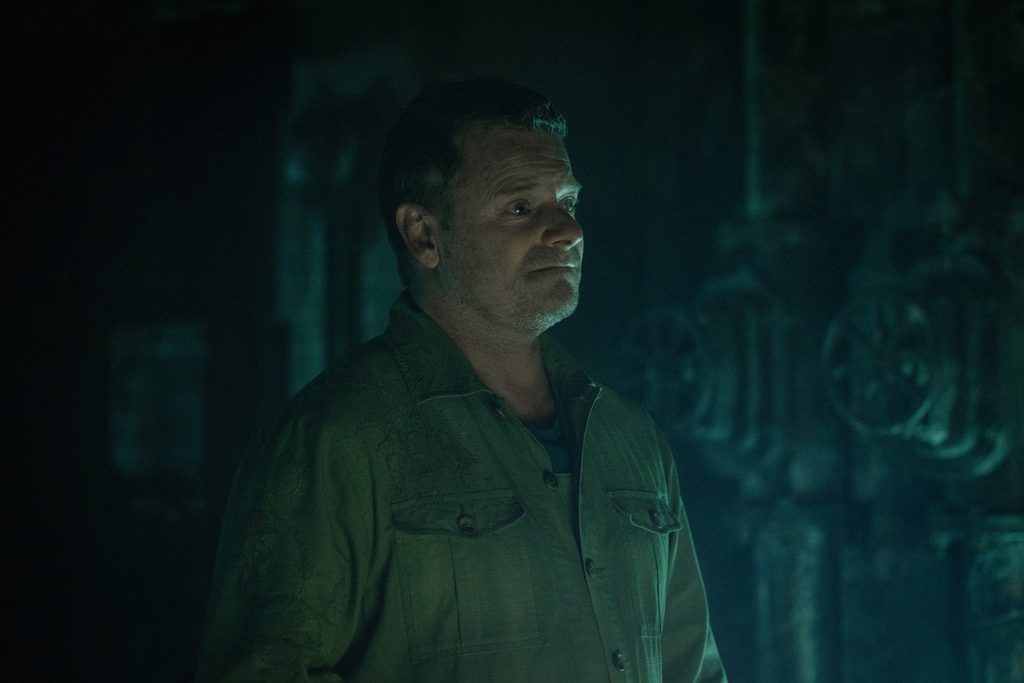
The series spends an enormous amount of time with Juliette inside Silo 17, where she meets Solo, played brilliantly by Steve Zahn, who is easily one of the most underrated actors of his generation. Eventually, she also discovers a small group of younger survivors usually referred to as “the kids.”
A great deal of the story focuses on the relationship between Juliette and Solo, which starts off incredibly tense before becoming one of the more touching relationships in the series. But later in Season 3, these characters practically disappear from the story.
Juliette sends Lukas Kyle (Avi Nash) and Patrick Kennedy (Rick Gomez) outside to reach Silo 17, partly so they can obtain information that will help Silo 18 stop the Safeguard. The two are attacked on the way there but survive and make it inside. Patrick eventually reestablishes radio contact with Silo 18, and we learn that Solo and the kids are still alive.
But after spending so much time making us care about Solo and those kids, the season never really gives them a proper payoff at the end. That bothered me. It wouldn’t have taken much. Even a brief scene checking in with Solo and the kids near the end of the finale would have provided some continuity. Instead, after making these people an enormous part of Juliette’s story, Silo essentially puts them aside so it can move on to its next batch of mysteries. Characters shouldn’t be just mysteries to be solved. If you spend that much time making me care about them, I want to know what the hell happened to them.
Helen is also strangely absent from Episode 10. She’s been such a major part of the Before Times storyline, but when we reach the finale, Daniel has become the seemingly diabolical Troy and is desperately trying to remember Helen’s name while Helen herself is nowhere in sight. We don’t even know what ultimately happened to her.

Then there’s Victor. Troy asks Victor to find out Helen’s name, and we discover that Troy has apparently asked him the same question at least half a dozen times. It seems like this happens every time Troy is awakened and pieces of Daniel start finding their way back through whatever has been done to his memory. Eventually, Victor commits suicide, but he leaves a video message for Troy revealing that the woman he keeps remembering was named Helen Drew.
But here’s the bizarre thing: Victor doesn’t tell Troy that his own real name is Daniel. Why? If you’re going to tell him Helen’s name, wouldn’t you also say, “Oh, and by the way, your name wasn’t always Troy. You were Congressman Daniel Keene”? If Troy starts investigating Helen, he’s presumably going to discover his real identity eventually anyway, so it almost feels like a brain fart on the part of the writers. Maybe there’s a perfectly good reason Victor only gives him Helen’s name. Maybe Season 4 will explain it brilliantly. But that’s exactly the problem. It’s another question.
Don’t get me wrong—I realize that Silo is, at its core, a mystery series. But the way it keeps raising new questions without answering most of the old ones gets incredibly frustrating after a while. And it gives me flashbacks to Lost. It’s not that the two shows are particularly similar, but I was ultimately left very disappointed by Lost. There were way too many things that were never explained, and eventually it stopped feeling purposeful and started feeling like poor writing.
I think Silo is very well-written. But even if they’re intentionally choosing not to explain the show’s biggest mysteries yet, at some point you start to feel like they’re torturing you. If their goal is to agonize their viewers, well, mission accomplished. And it’s too bad because Silo is actually an excellent show. I love Rebecca Ferguson’s performance as Juliette. We see her being a complete badass at times while other moments find her being incredibly vulnerable and Ferguson plays both sides of Juliette beautifully. And I love the world the show has created. I’m fascinated by the silos and desperate to understand why they exist. There are scenes in this show that have had me completely glued to the screen.
But for every question they answer, they seem to raise several bigger ones. And the fact that they keep withholding answers to the biggest questions just grates on my nerves after a while.

I only started watching Silo recently, so until the middle of Season 3, I was able to watch episode after episode. That meant some of my questions were being answered quickly simply because the next episode was already sitting there waiting for me. But now Season 3 is over. And we have to wait until July 2027 for Season 4.
At the very least, I think they should have explained how Daniel became Troy. That’s the thing that infuriated me the most. You give us nine episodes where Daniel seems like that rare politician who actually cares about his constituents and the world, then you turn him into Darth Vader—a mass murderer—and you don’t even give us the slightest inkling of how he underwent such an extreme transformation. That’s not the kind of mystery that makes me say, “Ooh, I wonder what happens next.” It makes me say, “What the hell happened?” There’s a difference.
If someone who’s never watched Silo asked me whether they should start watching it right now, I’m honestly not sure what I would say. I think I would warn them that the show constantly raises bigger and bigger questions without answering the majority of them. If that sort of thing gets on your nerves, I might actually recommend waiting until the fourth and final season comes out next year and then watching the entire series.
And I think that’s what bothers me the most: I’m not completely confident Season 4 is going to answer everything either. If I knew for certain that the writers were going to explain all of this next season, I wouldn’t be nearly as frustrated. But that’s where I start getting flashbacks to Lost and wondering whether Season 4 is ultimately going to leave me feeling negatively about Silo the way I do about Lost, which I genuinely regret having spent so much time watching. I really hope not. Because despite everything I just complained about, I still think Silo is an excellent show.
So, what do you think? Am I being too hard on Silo? Did you find the Season 3 finale more satisfying than I did, or are you also feeling rather frustrated? And what are your theories about all of these questions the show still hasn’t answered?
Do tell…
And remember: theories based on the TV series are welcome. Book spoilers are not.
Leave a Reply