
by Michael McCarthy
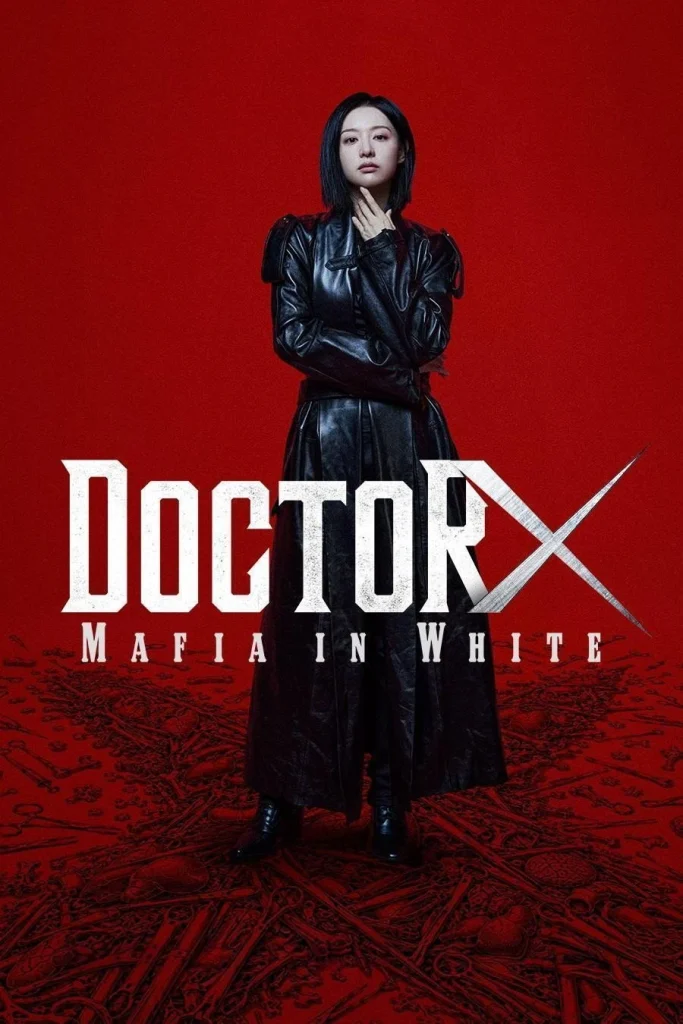
A recently released new remake of the popular Japanese series Doctor-X: Surgeon Michiko Daimon, which I have yet to watch but intend to start soon, Doctor X: Mafia in White is a 12-episode Korean medical drama starring Kim Ji-won (Queen of Tears, My Liberation Notes) as Gye Su-jeong, a brilliant freelance surgeon who has little patience for hospital politics. She takes on seemingly impossible surgeries that other doctors are unwilling or unable to perform, often clashing with her colleagues, many of whom seem more concerned about their reputations and advancing their careers than saving people’s lives.
For much of its run, I thoroughly enjoyed the series. There’s something immensely satisfying about watching Su-jeong put arrogant doctors in their place, and Kim Ji-won is always a pleasure to watch. Unfortunately, the series ultimately became considerably darker than I would have liked.
SPOILER ALERT: The following contains major spoilers pertaining to the final two episodes, as well as references to child sexual abuse.
The writers apparently decided that what the series needed in its final two episodes was a storyline involving a respected doctor and humanitarian who was secretly a pedophile who had sexually abused countless children. When the man ends up needing a heart transplant, Su-jeong finds herself wrestling with the decision of whether or not to save his life.
While I understand the ethical dilemma the writers were trying to explore, I found the whole storyline incredibly depressing. Furthermore, I couldn’t help but think about how that donor heart could have gone to someone else. It’s one thing to argue that doctors have an obligation to save people’s lives regardless of what those people have done, but it’s another thing entirely when you’re dealing with a limited resource like a donor heart and a patient who belongs behind bars.
Ultimately, after thinking about failing at a surgery for once (on purpose), Su-jeong saves his life, and he experiences the brutal agony of regaining consciousness during surgery through an improbably timed medical complication rather than as a result of deliberate revenge–even though the show spends several minutes letting you think the anesthesiologist is going wake him up during surgery on purpose. Presumably, we’re supposed to derive some satisfaction from this, but by that point I was simply eager for the storyline to be over. Also, the guy was portrayed as such a monster that I couldn’t help but hope that he would die during surgery so seeing him live–even if in pain–wasn’t particularly satisfying.
I was also disappointed by how the storyline involving the doctors’ strike was resolved. It was never even clear to me who I should be supporting–the doctors on strike or the remaining administrative staff. As a result, I didn’t know if I should be rooting for the striking doctors or siding with the hospital. And the eventual closure of the hospital made for an even more depressing conclusion. Moreover, I would have liked to have seen considerably more character development on Su-jeong’s part over the course of the series. She starts off with a rather cold personality but that never really changes. I do appreciate the fact that later episodes showed us why she became so icy but it still would have been nice to see her displaying warmer emotions in the end. (Kim Ji-won has a wonderful smile; it’s too bad this series barely ever utilized it.)
I’m certainly not opposed to television shows tackling dark and uncomfortable subjects–in fact, I tend to prefer such shows–but I felt as though the writers took a perfectly entertaining medical drama here and sucked much of the enjoyment out of it during its final two, very depressing and disturbing episodes, which is why I can only give this one a C rating.
Leave a Reply