
interview and photos by Michael McCarthy
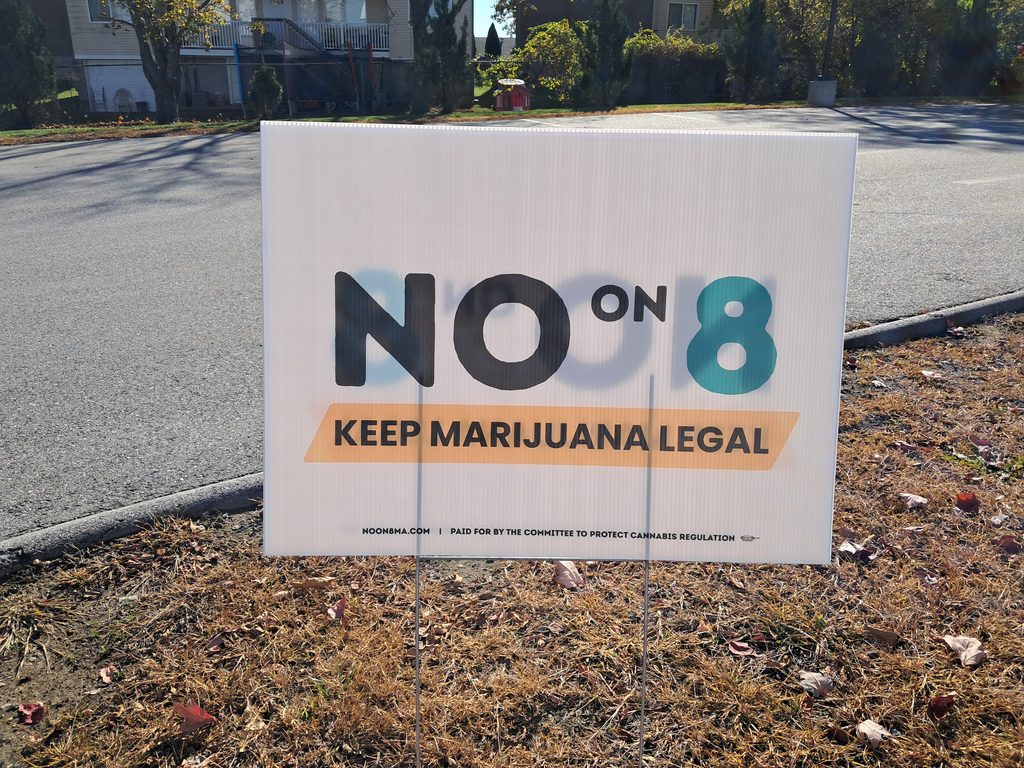
On Tuesday, November 3rd, Massachusetts voters will decide the future of recreational marijuana sales in the state. Question 8, if approved, would repeal the laws allowing the retail sale of recreational cannabis, effectively shutting down the state’s legal adult-use marijuana industry. Medical marijuana would remain legal, as would possession of limited amounts of cannabis, but recreational dispensaries would no longer be permitted to operate as they do today. The changes would take effect on January 1, 2028. A YES vote would support the repeal, while a NO vote would preserve the existing laws.
As someone who uses marijuana for medical reasons, I’m strongly opposed to Question 8. Although I could pursue a medical marijuana card, I appreciate being able to walk into a licensed dispensary and purchase cannabis without having to make an appointment with a doctor and potentially spend hundreds of dollars obtaining medical certification. I don’t believe that should be necessary for adults who want to purchase a product that has been legal in Massachusetts for nearly a decade.
I’m also a satisfied customer of Lazy River Products, a cannabis company based right here in Dracut, Massachusetts. When I started thinking about interviewing someone in the cannabis industry about Question 8, Lazy River immediately came to mind. Not only do they operate dispensaries, but they also grow their own cannabis and manufacture a wide variety of products, including concentrates, chocolates, and other edibles. I thought it would be interesting to learn more about the business and find out how the proposed repeal could affect a company that’s invested so much in the industry.
Fortunately, Lazy River’s president and CEO, William Cassotis, was happy to speak with me. Cassotis founded the company with two childhood friends, Mark Leal and Kevin Platt, in 2018. What began as an ambitious undertaking has grown into a substantial operation employing approximately 130 people.
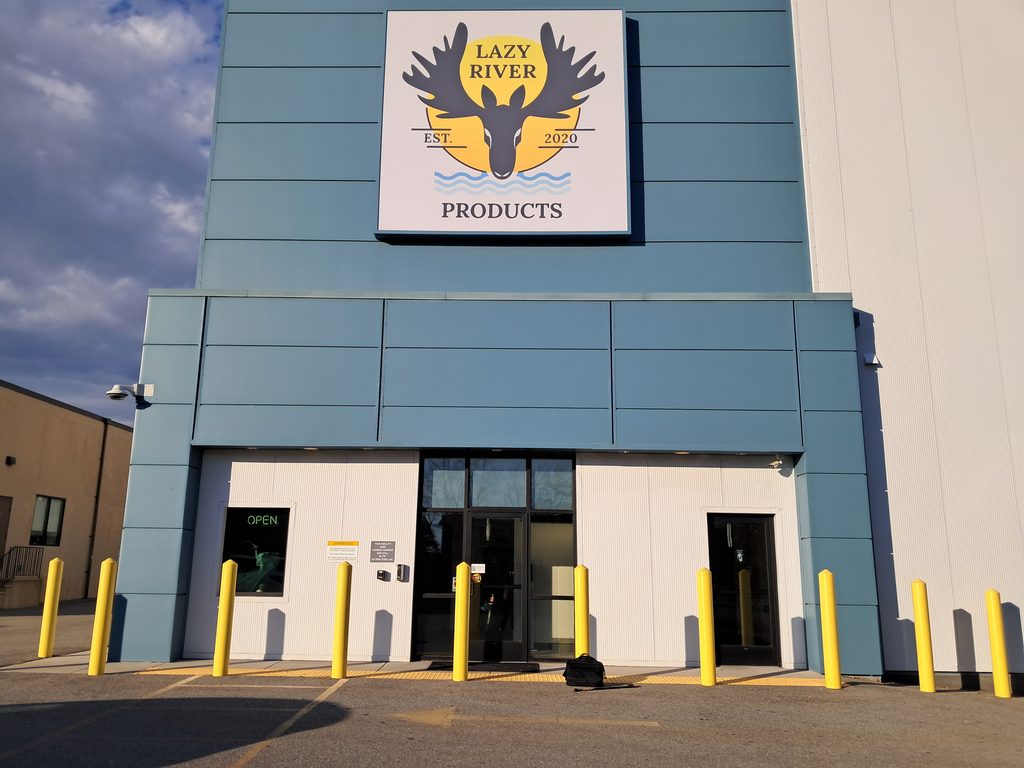
Following our interview, William generously gave me an extensive behind-the-scenes tour of Lazy River’s 40,000-square-foot cultivation and manufacturing facility. I spent roughly an hour and a half exploring the building, watching employees at work, and learning about the surprisingly complex processes involved in growing, processing, and packaging cannabis.
I came away thoroughly impressed. Everyone I encountered was friendly and professional, and the areas I visited were exceptionally clean and well organized. The sophisticated equipment used throughout the facility was fascinating, particularly the computerized systems involved in caring for the plants. And speaking of the plants, I’ve seen some beautiful marijuana plants in photographs over the years, but I’d never seen anything quite like the ones growing at Lazy River. Some of the flowering plants were absolutely spectacular.
During our conversation, William discussed the company’s origins, the considerable financial investment involved in establishing Lazy River, the challenges of operating in an increasingly competitive cannabis market, and the development of its various products. We also talked at length about Question 8, the arguments being made by its supporters, and what passage of the measure could mean for Lazy River, its employees, and the Massachusetts cannabis industry as a whole.
Whether you’re a cannabis consumer, someone who has never set foot inside a dispensary, or simply a Massachusetts voter trying to understand what’s at stake on November 3rd, I hope you’ll find our conversation as interesting and informative as I did.
MM: There’s two ways we could go about this. We could start with the questions about the story behind the company and such, or we could start with the Question 8 stuff if you prefer.
WC: It might just make sense to start with the company since it’s sort of a preface to things.
MM: You mentioned in your email that Lazy River began when a group of old high school friends reunited after pursuing different careers. I’d love to hear that story about how you came back together and arrived at the idea of starting Lazy River.
WC: Sure. There are three founding members of the business. Myself, I’m William Cassotis. I’m the CEO of the company, and my prior experience is that I ran other companies. I’ve since sold those companies to private equity and been through that whole experience. So I’ve been very fortunate in that respect. Other members of the team include Mark Leal, who is our chief operations officer. He’s the COO of the company, and Mark comes to us with about 25 years in corporate America with that type of experience building successful teams and managing those teams. Lastly, the third and final member of our ownership team is Kevin Platt, and Kevin’s the chief cultivation officer.
Mark and I, during our latter high school years, were getting ready to go off and start our college and professional careers. We went down that path. Kevin went down the path of moving out to California and taking his chances out there. He had a career in mind. He was going to be a professional skateboarder at the time. Very good at what he does. Kevin went down that path and was just sort of exploring things. During that period, this was the mid-90s, the cannabis community came together and started and passed the first of all cannabis medicinal legislation in the United States, Proposition 215. And Kevin was out there–he was in San Francisco at the time–and was fortunate and ended up falling into and being able to work with Dennis Peron, who was the godfather of all medical cannabis. He was the guy who drove all of this legislation back in California in the day. He’s still a huge advocate today. Kevin worked with him and was growing with him to support people that were literally dying of HIV at the time.
And even at that time, the federal government was still kicking in dispensary doors and arresting people and patients. And so Kevin was exposed to all of this. This is where he cut his teeth in terms of getting his exposure and his experience with cannabis.
Only years later–after going to Hawaii–he came back to the east coast of Maine when Maine passed their caregiver program for medicinal cannabis up there. He came back to New England to help support that movement up in Maine. Only then were discussions starting in Massachusetts about legalizing adult-use cannabis. They had already passed medicinal cannabis in Massachusetts, but back when we were just exploring getting something like this started, they were passing adult-use legislation.

Bulk Cannabis – Post Harvest, Pre Processing.
MM: When was that?
WC: This was back in 2017. It’s probably when we just started talking about this. And then shortly after that, we incorporated our company in 2018. And then in 2020, we went ahead and opened our first facility. But the story there is that these are three guys that all grew up together since elementary school. We’ve known each other since single-digit ages and have then gone through all of our experiences growing up.
We’ve all been cannabis enthusiasts, even when the product was incredibly illegal and very difficult to get access to all those years. We were those guys that were buying product under streetlights and unsafe environments with an unregulated product. And we were exposed to all of that. So when the possibility came about of bringing this into a professional, legalized environment, obviously knowing the three pillars that we had available to us–being myself, Mark, and Kevin–it was almost everything that we needed to get something like this started in an educated manner. One where we could actually sit down and talk through this. And that’s what we did.
MM: Sounds like you really did your homework.
WC: We spent a considerable amount of time researching this before we got into this. And before signing any agreements or building any buildings, I actually took Mark out of work. I told him that we were going to move forward with this. He agreed to come on board. And only from there did I pull him out of his corporate job. And we spent the next probably six to eight months going out to the West Coast and visiting companies and resources in existing legal states to help us understand the right way of doing this and the obstacles that were going to be ahead of us. Because at that point Colorado was probably a few years into legalization already and there was a lot to learn there.
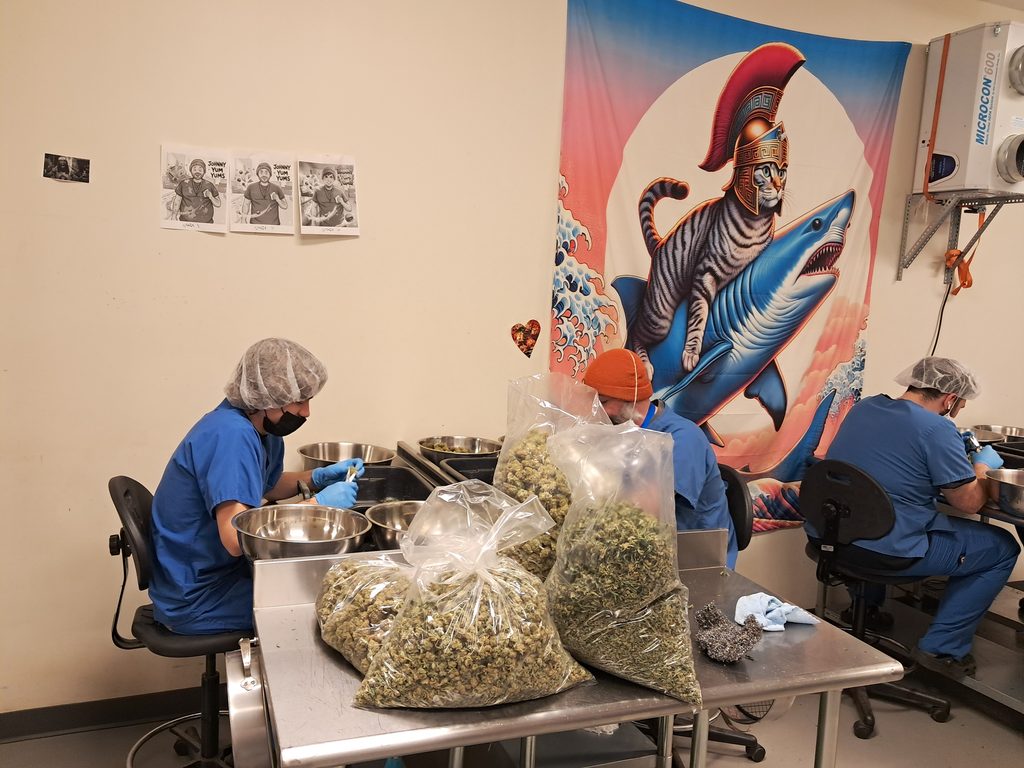
Processing the product seen in the previous image. Hand Trimming off the fan leaves off of the flowers buds for a highly procured finished product.
MM: And was the industry receptive to giving information to someone like you guys?
WC: Very much. As a matter of fact, one of our leading resources at the time was an architect that we sought out who had experience designing and building successful places throughout Colorado. This individual and company was able to invite us out and set up a number of tours for us to go through some of their own builds over the years to see where they started and where they ended up in terms of technology and layouts and workflow, etc. We were very fortunate to have that ability to have gone through that. Because from there it led to us buying this property and then taking an abandoned, basically dry warehouse that was on the back piece of this property and turning it into a two-story, 40,000 square foot, state-of-the-art, fully integrated cannabis manufacturing facility and retail storefront. It’s a major undertaking. We did it and we were able to do it successfully.
MM: Are you the only company in this area that actually grows product?
WC: There are a lot of other places that have specific licenses in certain jurisdictions or in certain municipalities. For instance, in Dracut, there are four licenses. Retail licenses, right? Dracut also supports the ability to grow and to do product manufacturing as well–or to run a lab and create products through that manner. Of the four licenses in town, we’re the only one that is fully integrated and is manufacturing products here in Dracut. But down the street on the other side of town, we have RISE, who belongs to an organization by the name of GTI, Green Thumb Industries, and they are a large multi-state operator in multiple states. They do, in fact, have grow facilities here in Massachusetts but they just don’t happen to be in Dracut.
MM: I read that you had 20 Planet Fitness locations and sold them all to finance Lazy River. What were the signs that you saw that convinced you that it was that it was a risk worth taking?
WC: Our own exposure to the product over the years–to understand the benefits of it–and our own personal experiences, number one. First and foremost, what I would say is we understood already that this was not going to be an easy road. I think there were a lot of people that initially got into this opportunity thinking that this was only going to be an upward trajectory in terms of growth and profitability. But by us going out to Colorado in advance of building and being able to tap into these resources, [we were] in there late enough for there to have already been a downturn where the product pricing was shifting. Licensing was already coming into question–the number of licenses being issued, the amount of product coming into the market, and the effect that was going to have on market pricing in the future. All of that was a big point of conversation when we were out there touring. So this was all a part of our consideration in getting into this. We knew that it was going to be very difficult at a certain point. We just didn’t know when. Our initial trajectory told us seven years from the date that we got into this. It just happened to hit us a few years earlier than initially anticipated.
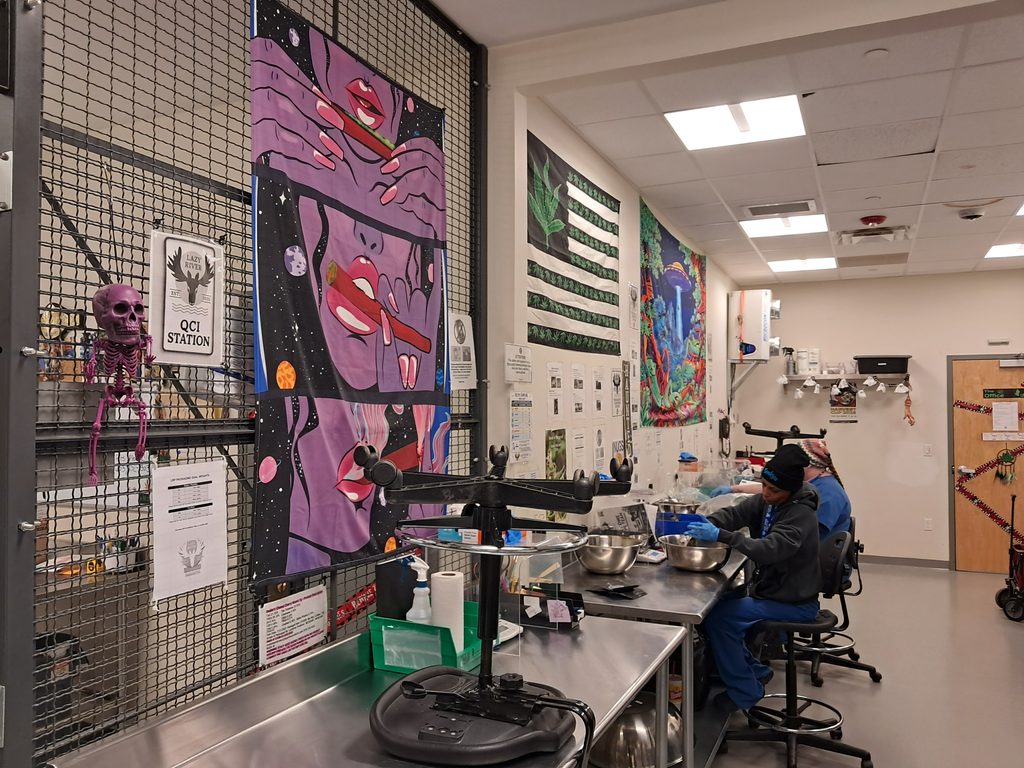
Flower Packaging Area:
Next step once product has been trimmed. Here they are packaging Class A buds into finished packaging.
MM: When was that?
WC: About five years after we started, we started to see the downturn a little. It was a little premature of what we initially thought, but we were prepared for it. I think that’s what put us in the position that we’re in today where we unfortunately, like everybody else, had to ride the wave down as market prices were crashing, as a flood of product was coming into the market. Because like every other state, Massachusetts over-licensed. They had too much product come into the market. This is a standard commodity just like anything else, like copper, like barley or hops or anything else. The more of it that comes into the market, the more the price slips. The price has to drop. That’s just the nature of this business. But over this period of the market coming down, we just had a plan that we were in process of executing over that entire period of time. We saw the market ourselves.
MM: How’s the market doing now?
WC: If you look at the feedback from the state, it’ll tell you that the market is still sort of bottoming. But we saw it bottom a little while ago and put our plan in place almost a year and change ago. Because we already knew what was happening. So that allowed all of our changes to start to take effect about eight or nine months ago. And since then we have seen a month over month consistent revenue growth, a steady growth of us climbing out of this hole. Already, we were a successful company. The downturn in the market obviously affected revenue and margins slightly. But because we’re a manufacturer, we were far better able to position ourselves to succeed because we control the cost of the products that we are producing.
MM: What’s the story behind the name Lazy River?
WC: This is a question that comes up often. How did you guys arrive at Lazy River Products? The question came up [and] we had to name the company, right? At a certain point, it was like, okay, we’re going to move forward. And the initial thought process was, what words translate in terms of our previous experiences to the feeling that we want to project onto people about Lazy River? And at that time, we reminisced back to trips to up north. We would be up in that North Conway area and there’s a lot of great areas to go tubing in the summertime. And we wanted something that was also indicative of the area that we live in. You’ve seen a lot of our branding in terms of Lazy River, the moose and some of these other things. But really, the thought was, when we’re up north, in the middle of the summer, we’ve got all of our tubes strapped together. There’s a nice cooler in the middle filled with adult beverages. We’re all floating down the river. There’s music playing, we’re laughing, we’re all having a great time. And that feeling of floating down the river with absolutely zero inhibitions, no distractions, just nature, sun, just that feeling of complete freedom, that’s really what we were going for. And so the thought was, yes, the Lazy River. And then the other important point that we wanted to distinguish with our customers was that we were a product development company. And that we were creating the coolest, newest, most innovative products that you will find in mass cannabis. Even as a small batch, craft quality producer, which is really the market that we sort of pin ourselves in.
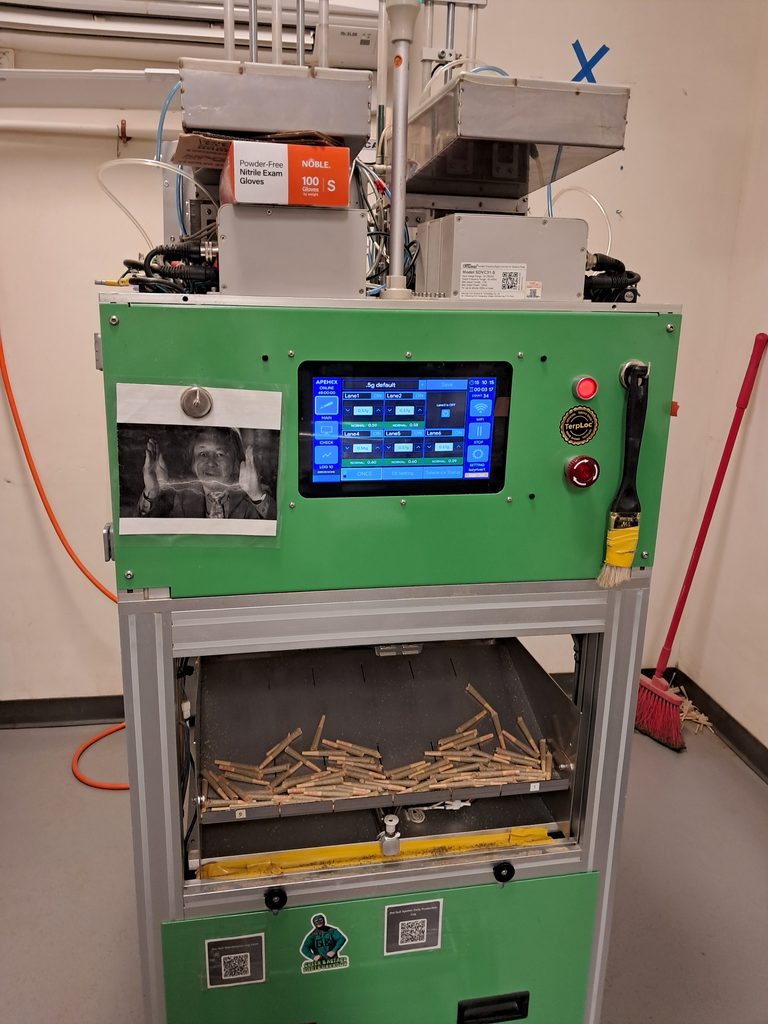
Aphex Pre Roll Machine:
This machine is creating .5g pre rolls for their Lazy River 5- Packs (x5 per pack). After this stage the product is hand crowned before being packaged.
MM: Tell me about some of your products.
WC: We do everything, right? So we grow all varieties of cannabis. I think for a lot of people that are in the business that are growing, they tend to stick to the cultivars that are easiest for them to grow, that they know are going to produce a certain yield, so they know how to determine their production schedules based off of projected yields. It’s all sort of very safe to go down a road with maybe a certain number of cultivars that you’re very comfortable with. The difference between those operators and Lazy River is that we do that too, but we consider ourselves huge innovators. For us, we always want to be on the cutting edge, even on the cultivation side.
[We] bring forward to the mass market the newest, trendiest cultivars that are trending even on the West Coast, that may not yet even be out here on the East Coast. Because of Kevin’s relationships with the breeders out in California where a lot of these genetics originate and come from today, worldwide. I mean, California has been distributing their genetics all over the world for many years now, which is obviously something else to talk about because that was all potentially coming to an end here very soon in terms being able to even ship seeds across state lines. But yes, we have a very innovative genetics program here. Kevin is a real genius at his work. He’s got 30 plus years in the business. So we have a very active and a very creative genetics program here on site. And so we’re able to innovate consistently.
MM: That’s excellent.
WC: We’re able to introduce new cultivars, keep it exciting and interesting. So that’s just the growth side. That’s just cannabis, okay. We’re not filling rooms with just one cultivar. We’re trying to bring smaller batches of the freshest product available to our consumers at all times. But on top of that, we’re then taking that cannabis and we’ll bring it into our lab. That lab has CO2 extraction methods in it. We have a CO2 extractor, which I will show you. We have an automated ice water agitator so that we can do ice water hash and then basically squeeze it for an all-natural, rosin-based product and products that spin out of that. This stuff is fantastic. It’s coveted stuff. People seek our products out because of the quality of the product that we start with.
MM: I know I’ve had some of your chocolates that I really like.
WC: That’s where I was going next. From the lab, we’re pulling not just things like rosin, but we’re also pulling different types of distillates. Some of that is consumable edible distillate. Other parts of it are not. It goes into our vape programs and other things that require distillate. But on the edible side, we take a portion of that distillate and it does go over to the kitchen. We do a fully functional kitchen here where we are manufacturing products, including edibles. That’s another big area of innovation for us. We have our staples, but then we also have our seasonal edible programs. So every season, we’re coming out with new, innovative flavor profiles that are very different. We’re always innovating the line to find better ways of making our products tastier, the textures softer and more palatable.
MM: The chocolates really melt in your mouth.
WC: Thank you, because we use very high-end quality products in the creation of our products.

IES CO2 Extractor – Raw Distillate Production Equipment:
They load dried, pulverized material into the unit and extract the THC from the organic material with CO2, heat and pressure. The cleanest form of extraction outside of Ice Water Hash Extraction which they also do at Lazy River Products.
MM: You know what I actually do with them? I put it under my tongue and it seems to dissolve under my tongue and kick in a bit faster.
WC: Exactly. There’s always going to be that hydroxy 11 portion of that where you have to bring it into your stomach, but you’re right. There are elements of that that can get in through your bloodstream and that’s a great area to be doing that in. We see great results with that with our tincture products, too. If you’re putting it directly under the tongue, same thing.
MM: That’s what I use primarily, tinctures.
WC: Obviously, that’s a big product that we make here, too. We make all of those products. What I would say, though, is that with this recent downturn in the market, one of the ways that we’ve been able to survive is by reformulating and re-strategizing what products we are willing to invest our energy into building. We used to build everything.
MM: Have you had to cut back?
WC: Now, because of where the market has gone, there are a lot of third-party partnerships that we have where people are willing to produce the products that we would normally do in that category for far less than we would ever be able to produce them for ourselves. They’re willing, in some cases, to use those products as loss leaders and take losses on them. So today, it’s a different market. Whereas before, we wanted to produce everything. Today we are selectively producing the things that we know produce us the most amount of revenue, that drive the most amount of demand in our stores. We have been through a massive SKU reduction effort over these past 18 months, shedding weight and getting lean.
MM: What are some of the products that you’ve continued to make, and what are some of the ones you’ve discontinued?
WC: What I would say is that the things that we’ve been finding large success in, obviously, will be continually doing–like our flower program and the innovating that we’re doing there. A lot of the new cultivars that we’ve been dropping have been driving a lot of new interest, but we’ve been delivering the ability to get that product to you in new innovative ways. We just introduced Bud Bars in each of our two retail dispensaries, both here and in Tewksbury–I should say Tewksbury’s about to get theirs–where you can walk in and actually look at a jar of the product and select a specific product that you want within that jar to go into your bag. You can get very selective about the product that you want. And of course, we’re putting the best of our product in there.
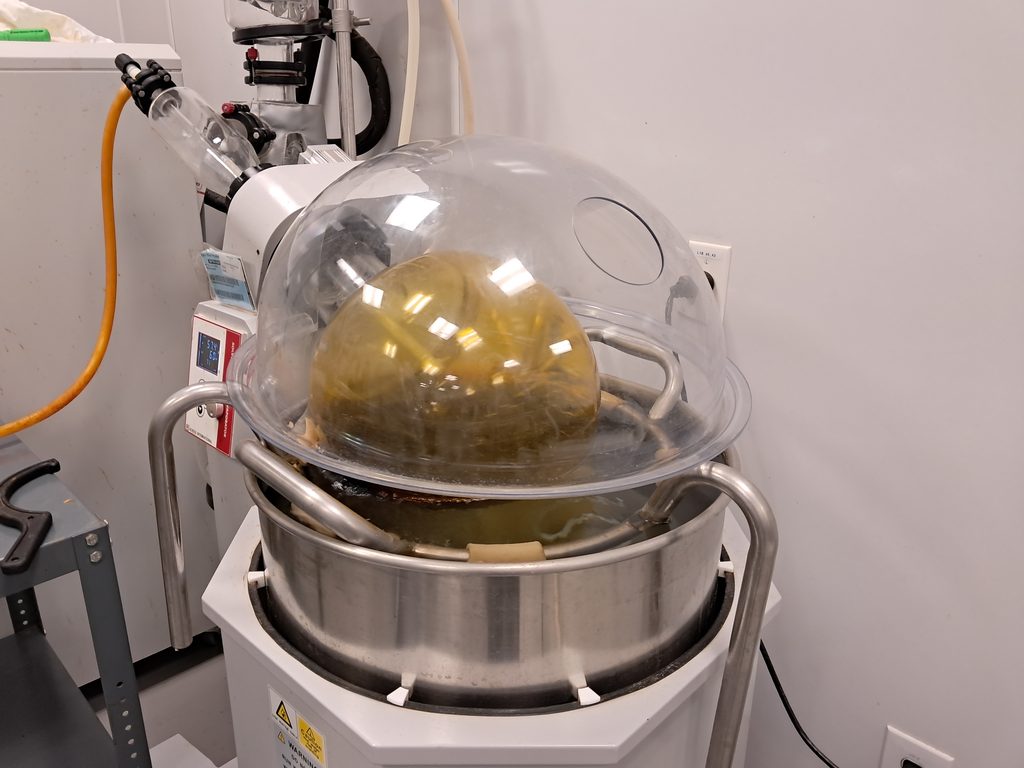
Roto Vap: Here they are stripping off the fats and waxes from the material provided to us from the CO2 extractor.
MM: What is popular right now?
WC: Vapes have been a big thing. There’s been a big shift to people consuming their cannabis in a smokable format through vapes because it’s more discreet. The customers that we’re seeing aren’t like you would expect to see in most retail dispensaries. Because we’re so open–because of our name, how we train our people, and the breadth of products that we provide–it’s a very comfortable place to shop. We wanted to make it more of a retail experience so people can come in like that. By opening up like that, we open ourselves up to a different type of a client.
MM: What group is your biggest client?
WC: Our target client and the people that we sell to the most are that canna-curious client who ranges in the age from 40 to 55 years old. That’s our strongest client demographic right now.
MM; Like people who are trying it for the first time?
WC: Well, a lot of people that are coming back to it after years of being away from it. You’re seeing this driving a lot of the effort behind Question 8 and what we’re talking about here today. Where is all of this coming from? Who is this being fueled by? And why is this all happening? A big part of this is just because–my personal opinion–because of the net effect cannabis has had on the alcohol and tobacco industry with the onset of legal cannabis sales throughout the country and the medicinal places opening up. You’re just seeing people migrate now away from alcohol and more towards cannabis consumption. As sales are starting to suffer, you’re now starting to see these large lobby groups put money and effort into combating what they’re seeing as a threat to their industry. I said, you know what’s funny? That 90% of the effort that came about driving Question 8 in the first place came from one nonprofit group out of Virginia. They were the ones that drove this whole thing.

Terpene Library:
CO2 Extraction and the Pope Still they use, allows them to further refine and concentrate their distillate but it also allows them to strip off and capture the plants individual terpenes and isolate them for future use in their products.
MM: Are you worried that question 8 will pass?
WC: I think people are more educated. And the latest polls are showing that 71% of people in Massachusetts are against this effort, and they want to keep cannabis legal in Massachusetts.
MM: I really hope that it stays legal.
WC: I do, too. And we’ll find out soon enough, won’t we?
MM: I have health problems where I could probably get a medical card pretty easily. But I just don’t want the hassle of having to go see a doctor and pay two or three hundred dollars to get them to sign off. Besides, I think people should be able to use it recreationally. I think it’s less harmful than alcohol, for example.
WC: Yeah. I also think that there are a lot of people that don’t necessarily need to go to a doctor to be diagnosed with something that [they already know they have] and to be prescribed something that they already know will help them. This is a natural thing that’s been helping people for centuries.
MM: As we’ve been discussing, Massachusetts voters will be deciding on Question 8 in November, which would eliminate legal recreational marijuana sales if approved. What was your initial reaction when you heard that an effort to roll back legislation had qualified for the ballot?
WC: It was incredibly concerning to me, obviously, considering the size of the investment that we made here. Lazy River Products did not bring on any outside investors. You mentioned selling my company and having the ability to get into this business to begin with. I was very fortunate. I worked very hard over a 15 to 20 year period to build a book of business and then package that up and sell it off to private equity, thank God. It allowed us to do what we did here, including building this back building and funding this entire effort without bringing in any outside influence or cash or capital from anyone. But that required a large risk. I mean, this isn’t everything for me, but it’s a substantial portion of what I got out of the sale and it’s something that I want to see succeed.
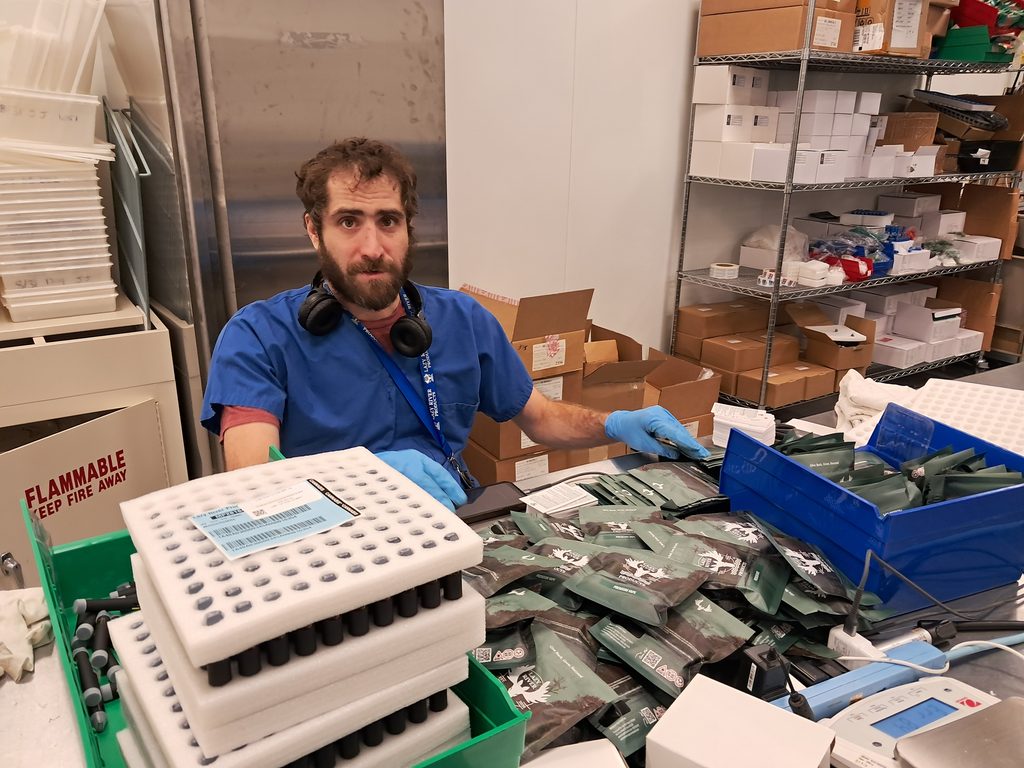
Finished Product Packaging for Manufacturing. Smokeable Distillate Pens – All In Ones.
MM: Of course.
WC: It shocked me to see it when the legislation came out. I said to myself, wow, we just made an incredible commitment, stuck our necks way out, and have survived the worst of what this industry could throw at us. And we managed to keep every single one of our employees employed during that period. We continue to pay our taxes. We continue to pay our payroll. Nothing skipped a beat and our reward for it is a bill that basically says we’d lose 85 [percent of our business]. Well, we’re in the process of going through medical licensing right now, but at the time that this bill was initially announced, we had only just begun that process. We were only, and still only are, adult use licensed. So, if tomorrow this thing passes, we would have an expedited path towards a review for it to become a medical facility, but you could expect about 80% of our business to go away overnight. That’s a scary thing because we employ about 130 employees here.
MM: And marijuana sales raise a lot of tax dollars.
WC: We pay a substantial tax bill every year and we pay money back to the local government to be operating in this municipality. So, there’s a substantial investment. There’s a lot of jobs and a lot of tax revenue on the line and I think that’s why the political leadership has started to come around on this. You see Maura Healey, you see Mayor Wu, you see these people starting to figure it out because in the state of Massachusetts alone, you’re talking about 20,000 jobs. And we just broke 10 billion dollars in collected tax revenue since adult use legalization. Come on, people.
MM: Most of these businesses couldn’t survive if only medical was legal?
WC: Those places in a lot of cases are going to have to close. Or they’re going to be forced to go down the path of medical. So, they will move to a medical only format. The customer base is not there to support that many stores. The medical market is significantly smaller than the adult use market.
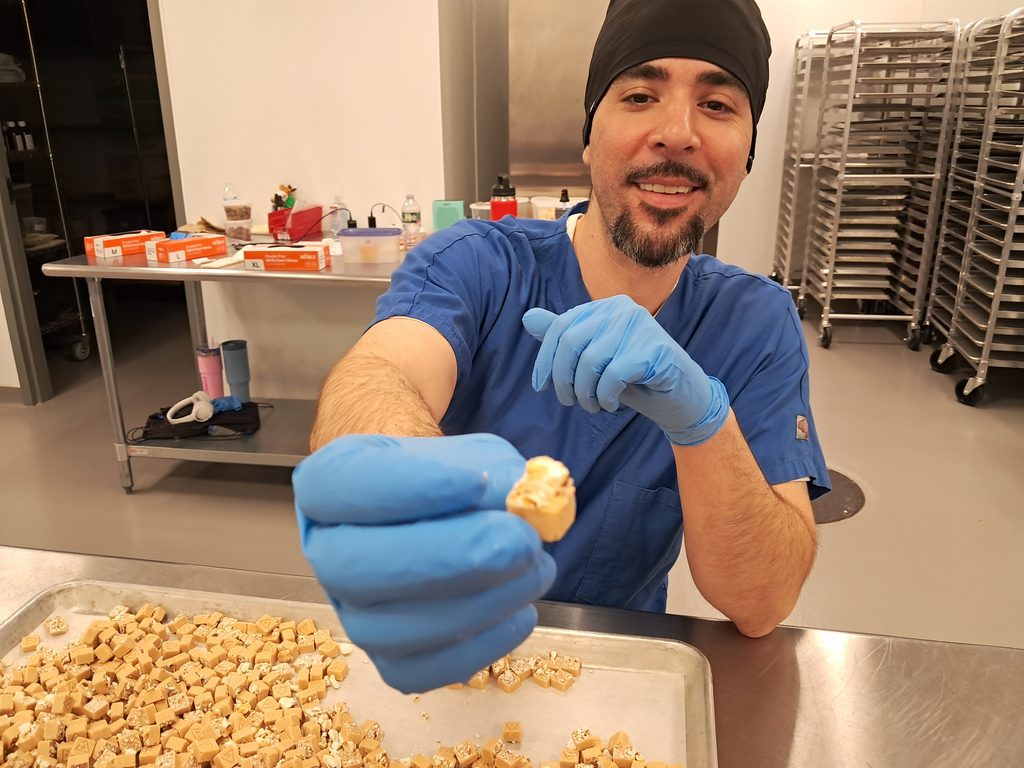
Kitchen Manufacturing:
Producing and QC’ing their“Extra Innings”, white chocolate edible with caramelized popcorn bits on top. Mmmm : ) Developed for Red Sox Opening Day and is still being produced today due to its popularity.
MM: Supporters of Question 8 have raised concerns about marijuana-related traffic accidents. How do you respond to those concerns? Do you think that there are any aspects of the current system that could be improved to try to reduce the odds of accidents?
WC: Yes. First off, I haven’t seen the statistical data myself. So, I would say I want to see the data and I would want to look into it. I’d want to know that we could track this in more than just a small control group. Like you–I’m sure, you’re educated. You’re going to want to see the real data to know that what they’re telling you [is true]. And this is why I was so willing to take this interview, because you’re a local guy, you’re smart, you know what I mean? And I can talk to people like you, no problem. Mainstream channels–these other news groups that are mainstream–they have their own storyline. They already know the story they’re telling. They’re not here to collect information. They’re here to align certain points with their storyline.
MM: It’s unfortunate that the media operates like that today.
WC: Yeah, it is. I forgot your initial question, by the way. If I haven’t answered it, I apologize. I got myself a little off track there.
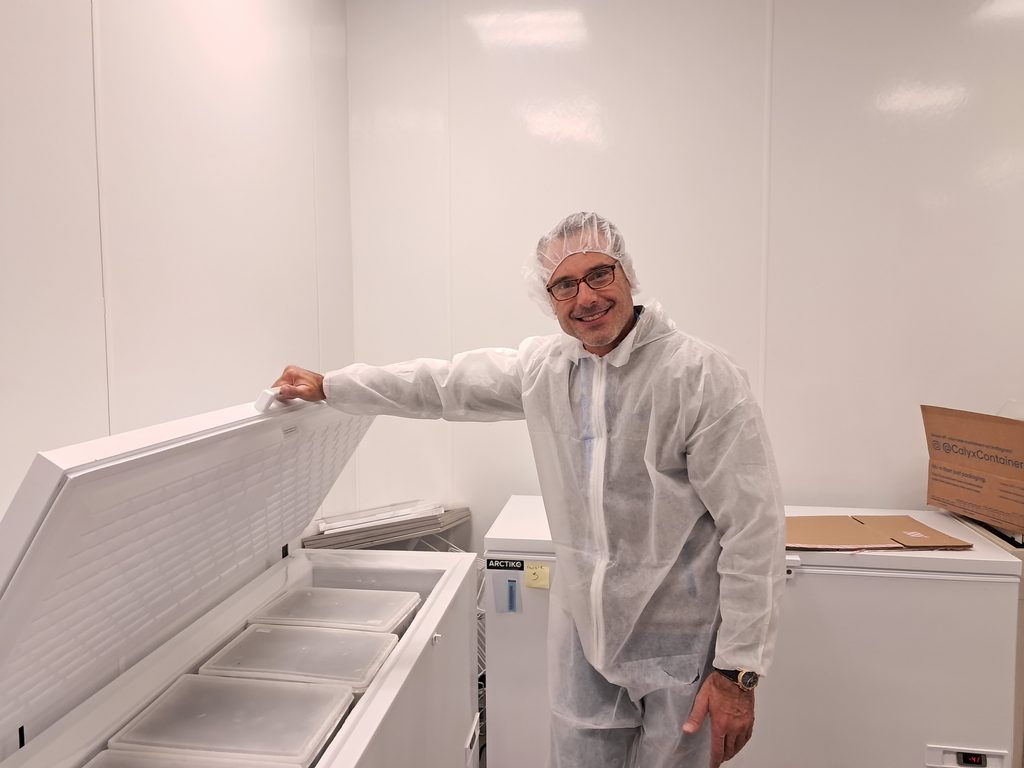
MM: It was just about the concerns that they’re trying to raise about traffic accidents and if you had any concerns about traffic accidents like that.
WC: Yeah, I would say that it’s likely that there are people that are consuming and getting behind the wheel. I would say that the same is true with alcohol, okay? And when we initially started with alcohol, alcohol was out far before there were any testing mechanisms available to the state agencies like the police force to test people on their alcohol level content. I think there’s a natural evolution with this as there was with alcohol or there would be with any new mainstream thing like this coming into the market where it might impede somebody’s ability to operate a vehicle. There was already a number of companies that are trying to come out with and license technologies for breathalyzers for THC. So, this is already happening. I strongly recommend doing the research. There’s nothing that has formally been accepted by any one government agency or any state or local agency, per se, but I know there’s a lot of companies working on the technology right now. I would say that there will come a time where that will be available and then this will become a non-issue. Or it will be not as much of an issue as it is today. It’ll always be an issue like alcohol–people getting behind the wheel and drinking and driving even today is still an issue, is it not?
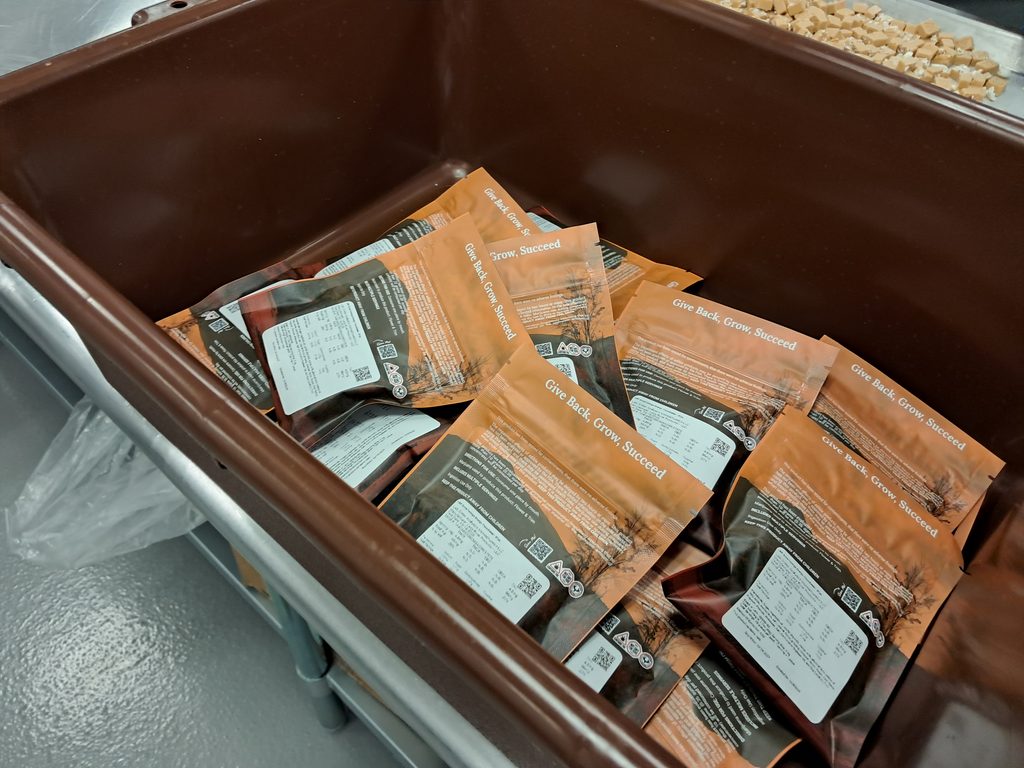
Kitchen Manufacturing: Finished Product – Peanut Butter Milk Chocolates.
MM: Of course.
WC: In terms of the number of accidents that are directly attributable to people that are behind the wheel that have been smoking cannabis and whether or not anything else has played into that–were they smoking cannabis and also drinking? One other fact, I do not condone or encourage operating a vehicle impaired in any way at all. But I just don’t know, I would say, that the effect would be the same if I had drank a quart of vodka versus me consuming a hit or two off of a piece of cannabis and then getting behind the wheel. I just don’t know.
MM: What would you say to a Massachusetts resident who doesn’t use marijuana personally but is undecided about Question 8? What do you think they should understand before voting?
WC: I think, for them, it’s the safety aspect, period. It’s like, okay, do you remember where we came from before legalization? How were people purchasing cannabis?
MM: Drug dealers.
WC: Typically not the top of today’s society. That’s not to say that there weren’t great drug dealers, but for the most part, this was an industry that was operated under streetlights, during night hours, in shady environments, cash only, just very untraceable, untrackable. The biggest thing today is, what are you consuming? Do you know what you’re putting into your body? What I would say is the biggest concern for the average voter right now is, if your son or daughter gets out there today and is now forced to buy their product off the street and they buy a bag of product that is laced with fentanyl, they take one hit off of that product and they’re dead. And I’m sure that their opinion would change quickly about putting this back into a regulated format.
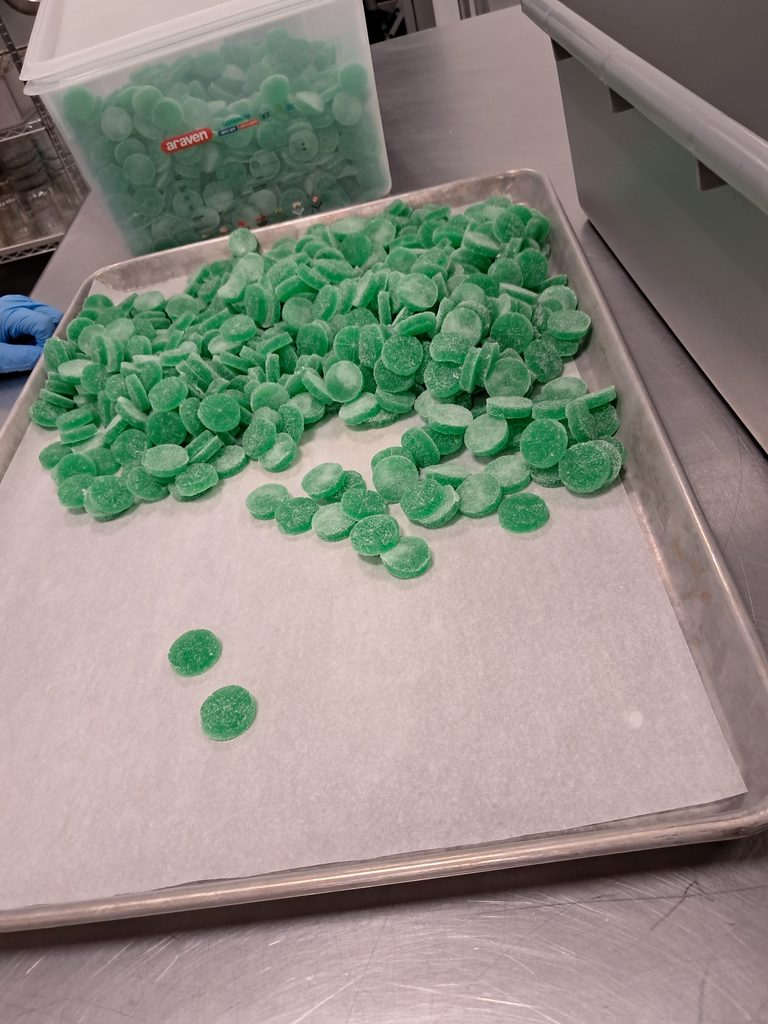
Kitchen Manufacturing – NEW PRODUCT “Wheels”.
These scored sour apple gummies technically have 4 pieces in each singular gummy. This allows them to infuse 20mg of medicine into each gummy. Being released this week.
MM: How optimistic or fearful are you about the way the vote will go? WC: I’m always concerned because it’s on the ballot. What I would say is that the polls, although you can’t trust them really, are leaning heavily in our favor. I mean, we’re showing that about 71% of Massachusetts voters are leaning in favor of keeping recreational cannabis legal in Massachusetts. So, I would say that I’m optimistic, but I am cautiously optimistic, okay, because until there’s zero doubt, there’s always doubt.
MM: Now, the new law wouldn’t take effect until January 1st, 2028. Do you think that there would be time to have additional legislation to stop it from becoming illegal by January 1st, 2028?
WC: Well, the vote’s coming up in November, right? So, I mean, you’re talking two months. I would say that that’s going to be a very hard thing to accomplish. That’s what I would say, legislatively. I would think that everybody would be probably trying to throw a best effort in on that, but I just have no way to measure what the outcome would be, to be fair. I would say that it’s a tight timeline. And the law is going to be the law. If we allow this vote to go through. The law is going to change and there’s going to be a big shift.
MM: What steps have you and Lazy River taken to make customers aware of Question 8 and its potential consequences?
WC: We have a huge team here. A very skilled admin back office team. You’re only able to see some of them in here working today because we’re all over the place between the manufacturing buildings or other retail facilities, etc. But marketing is a big thing for us. We have a great marketing manager right now who has been running the show for quite a while. When this initiative first came up, she was tasked with leading the charge on this in terms of the representation from Lazy River. And we have been attacking this on a number of different fronts. So we, of course, have our own internal newsletter, being that we’re an established operator and have been in the industry for seven years now and running a successful business during that period. There are tens of thousands of people that we reach out to and have access to. And a lot of them are Massachusetts residents, right? Because we’re only able to sell products to people within the state. Although I know you’re maybe thinking, yes, of course, we have some people that come down from New Hampshire, but of course, we’re going to be selling to people that live and reside in the state of Massachusetts. A lot of the people that we are touching and affecting are our local residents. We are sending them newsletters every week with standard updates, right?
But of course, a big part of this effort on our newsletters lately has been Question 8. What it means to them and educating our own consumers on the importance of voting in November against this law. Number two, we have inserts that are going into every single bag. If you were to walk over next door and buy a product today, and you opened up your bag afterwards, you would see an educational insert that instructs you to vote no on Question 8. There’d be a sticker in there as well that you can stick onto your windshield if you’re a supporter, etc. So there’s stuff like that that we’re doing. There have also been a number of local pockets of marketing groups that have been popping up across the state where other cannabis groups have been getting together to fund efforts on billboards and even on TV, believe it or not. So we’ve done some local stuff, nothing on the scale of TV throughout Massachusetts or anything, but we certainly have been contributing into a lot of those local efforts and alternative means of advertising to include direct paid advertising.
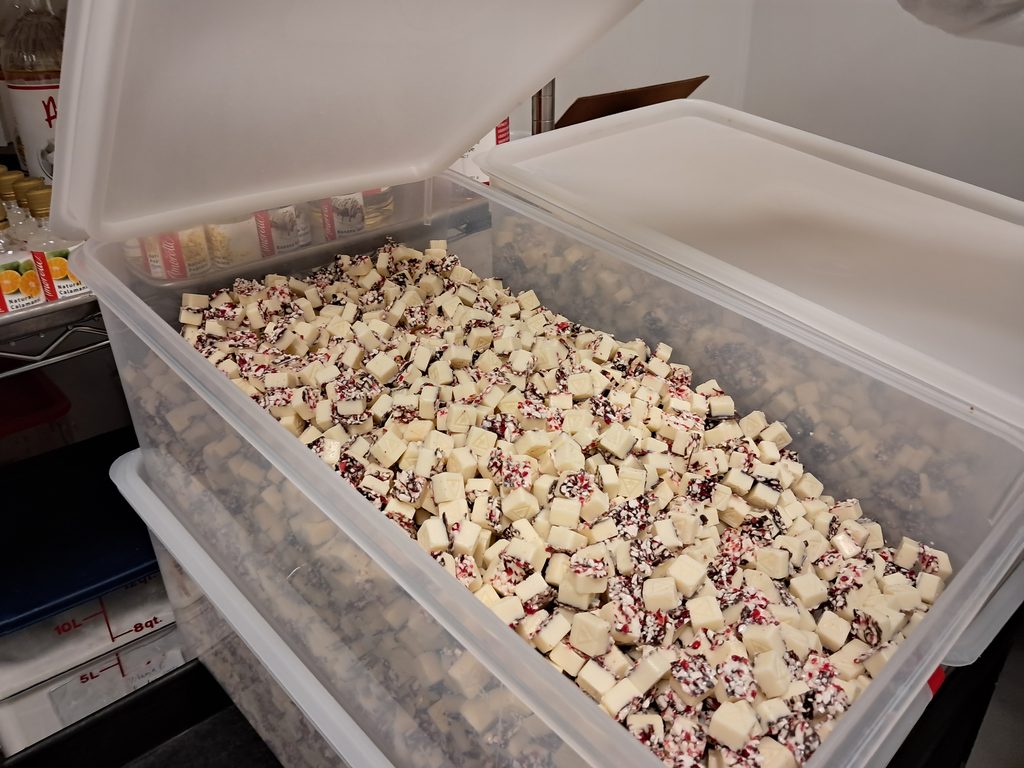
Kitchen Manufacturing – Peppermint Bark a holiday favorite at Lazy River Products.
MM: Will there be a lot more ads coming up as we get closer to the election?
WC: I think so. Our effort has been consistent with all the other stuff that we talked about since the day we had access to the materials. So we’ve started that effort weeks ago. But yes, in terms of in-store signage, yes, you’ll see a slow ramp up in terms of the amount of content that you’re seeing, certainly online as well in terms of our social presence, etc.

Kitchen Manufacturing: Supplies.
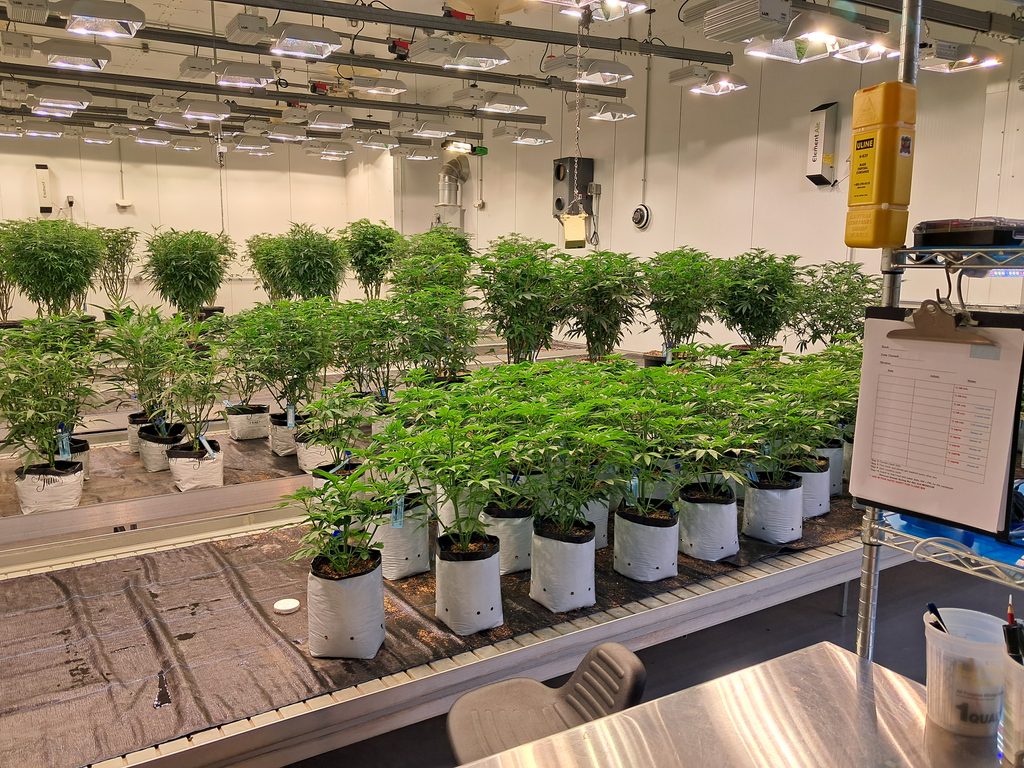
Mother and Veg Room in Cultivation:
Mother Plants for the clones they use for replication in their
flower rooms.
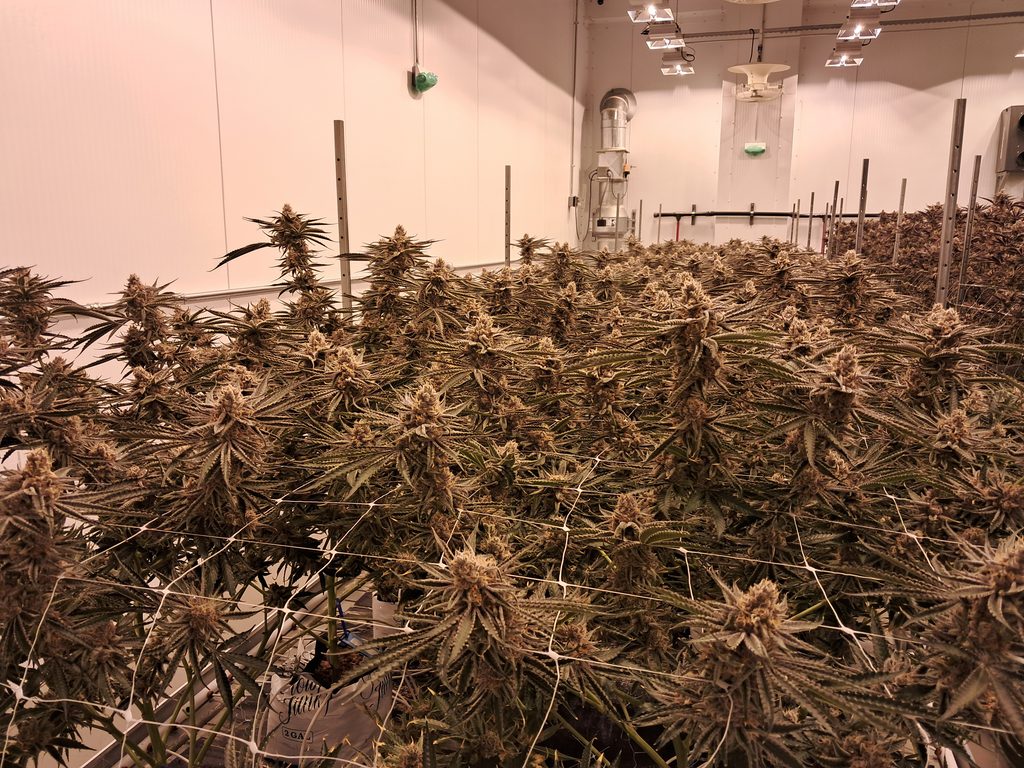
Cultivation Room – Ready to Harvest:
At the time this photo was taken there was 7 days left on this room before harvest.
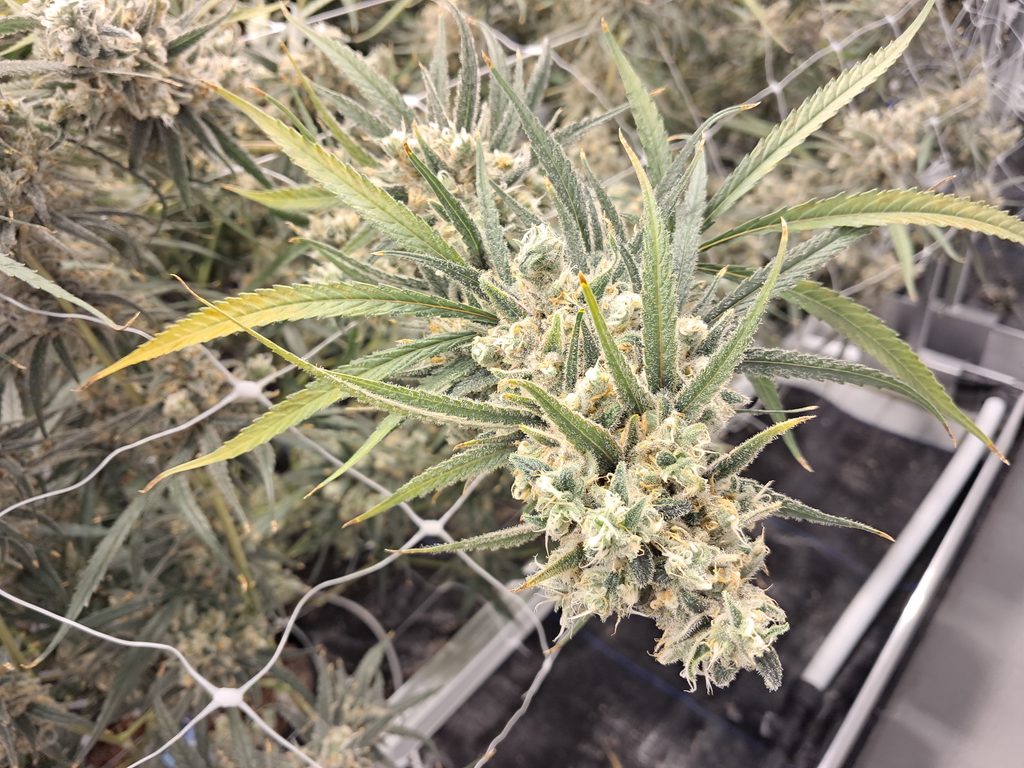
Blue Dream – The Best Blue Dream in Massachusetts.
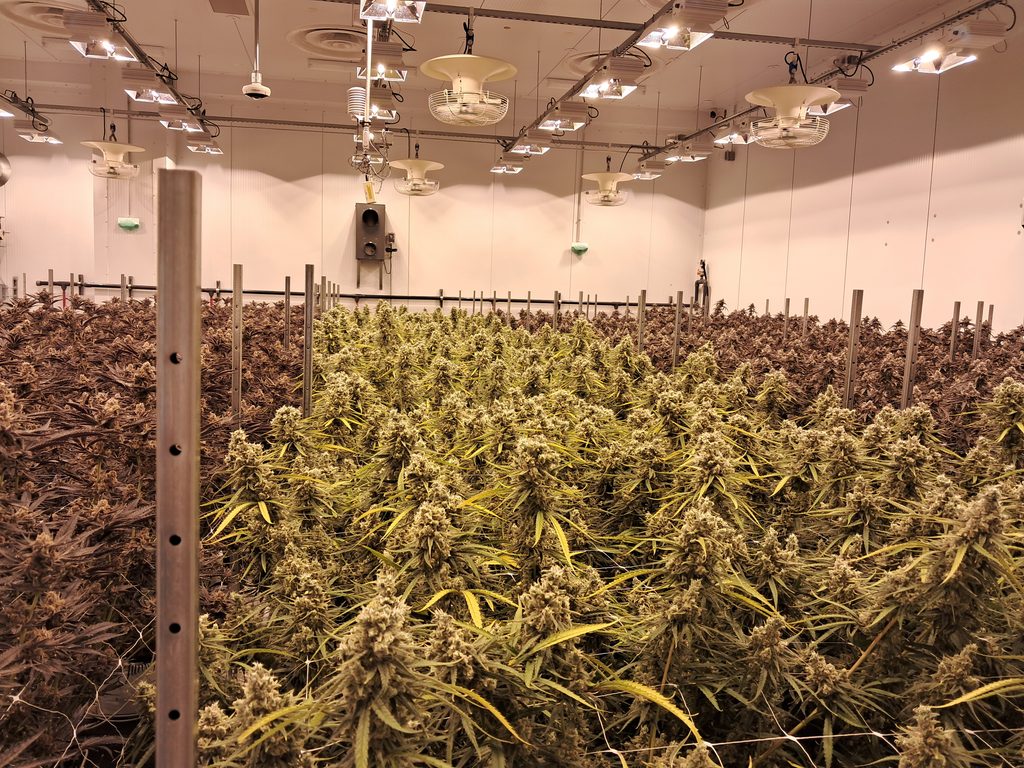
Flower Room – Variety and Quality
The contrasting colors represent the different cultivars grown in
Lazy River Products’ eight flower rooms.
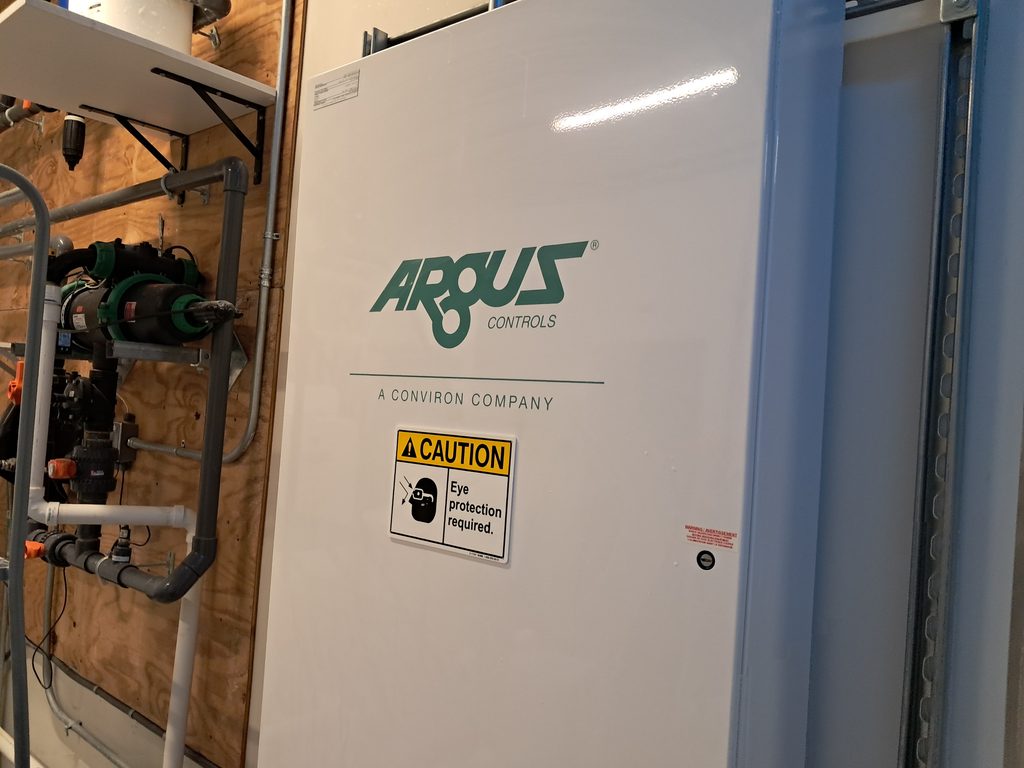
Automated Feeding System for the 8 Flower Rooms they have in cultivation – Agricultural Super Computer.
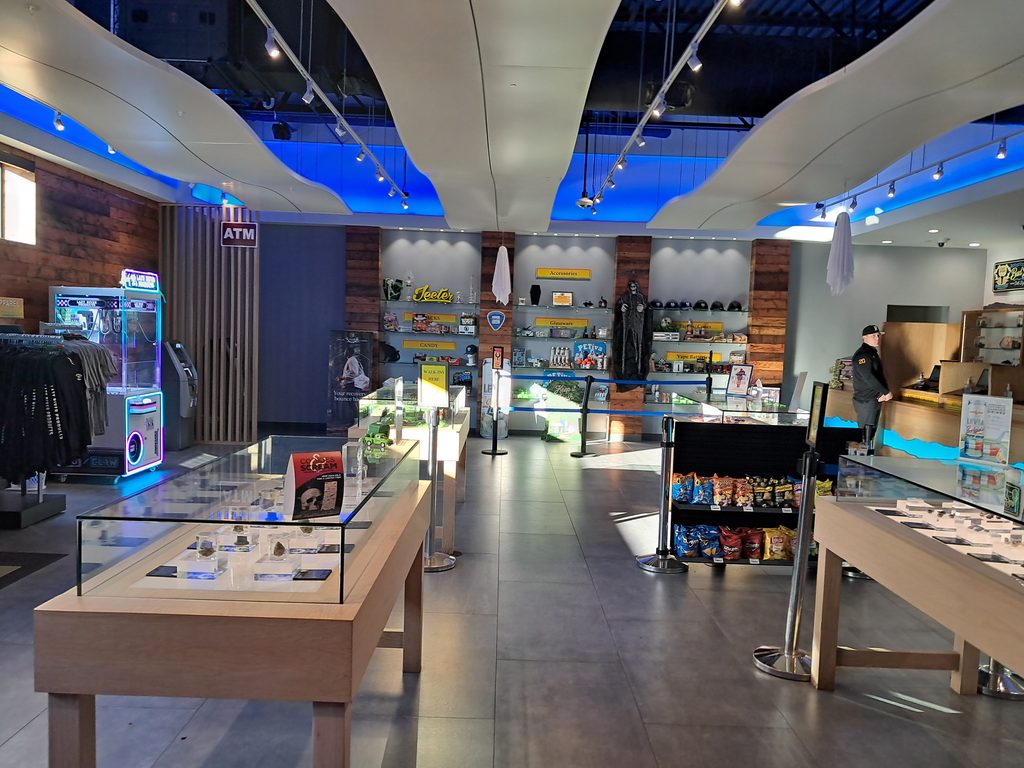
Retail – Dracut: You can also visit them in Tewksbury, MA at 553 Main Street (Rt 38) next to Ocean State Job Lots.
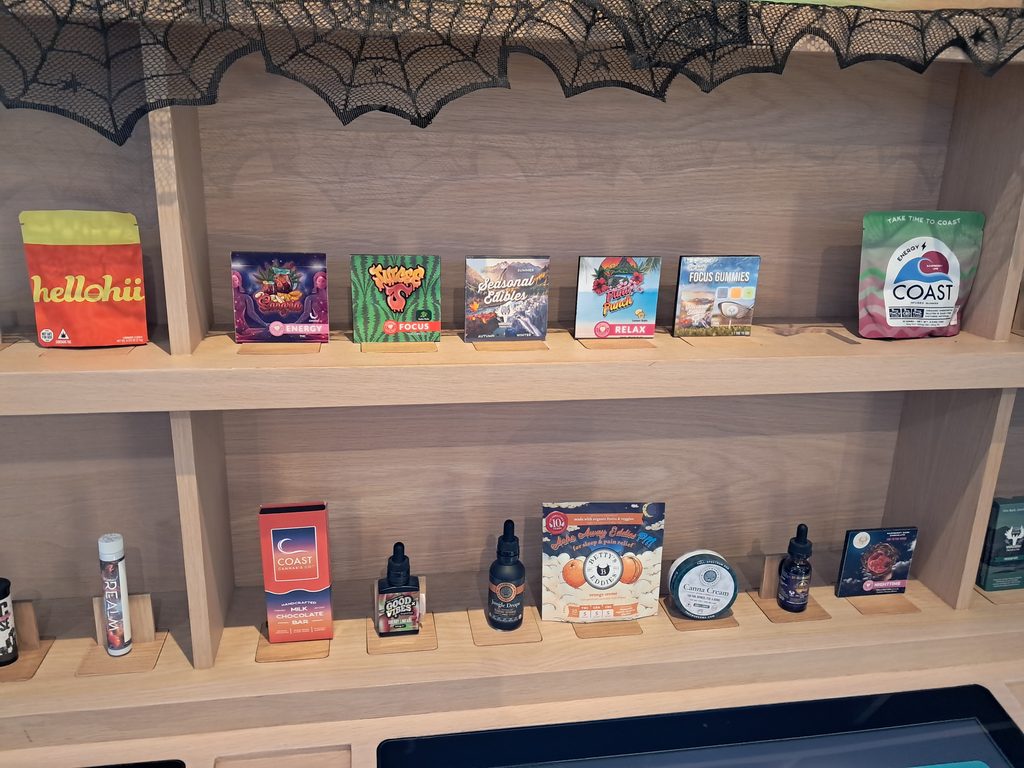
Product displays in retail
in Dracut.

Special thanks to William Cassotis and everyone at Lazy River Products for the excellent tour and interview.

Leave a Reply