
by Michael McCarthy
I’ve been fortunate enough to travel to Paris four times. My first visit was in 1999, when I spent the entire month of September there after arriving during the last week of August. I’d specifically chosen September 1999 so I could attend all four of Mylène Farmer’s sold-out concerts at Bercy, Paris’s famous arena. But virtually every day during my stay, I also found myself wandering into record stores, eager to stock up on as much French music as possible.
One of the albums that immediately caught my eye was the self-titled debut by a singer known simply as Silja. The album cover was très, très yellow and practically leapt off the record store shelves. It featured a photograph of the lovely blonde chanteuse leaning out of a restaurant’s takeout window, looking as though someone had just told her a particularly funny joke. For all I knew, the album could have been bubblegum pop along the lines of Britney Spears, but I was intrigued enough to give it a chance. I bought it tout de suite and hurried back to my hotel room to listen.
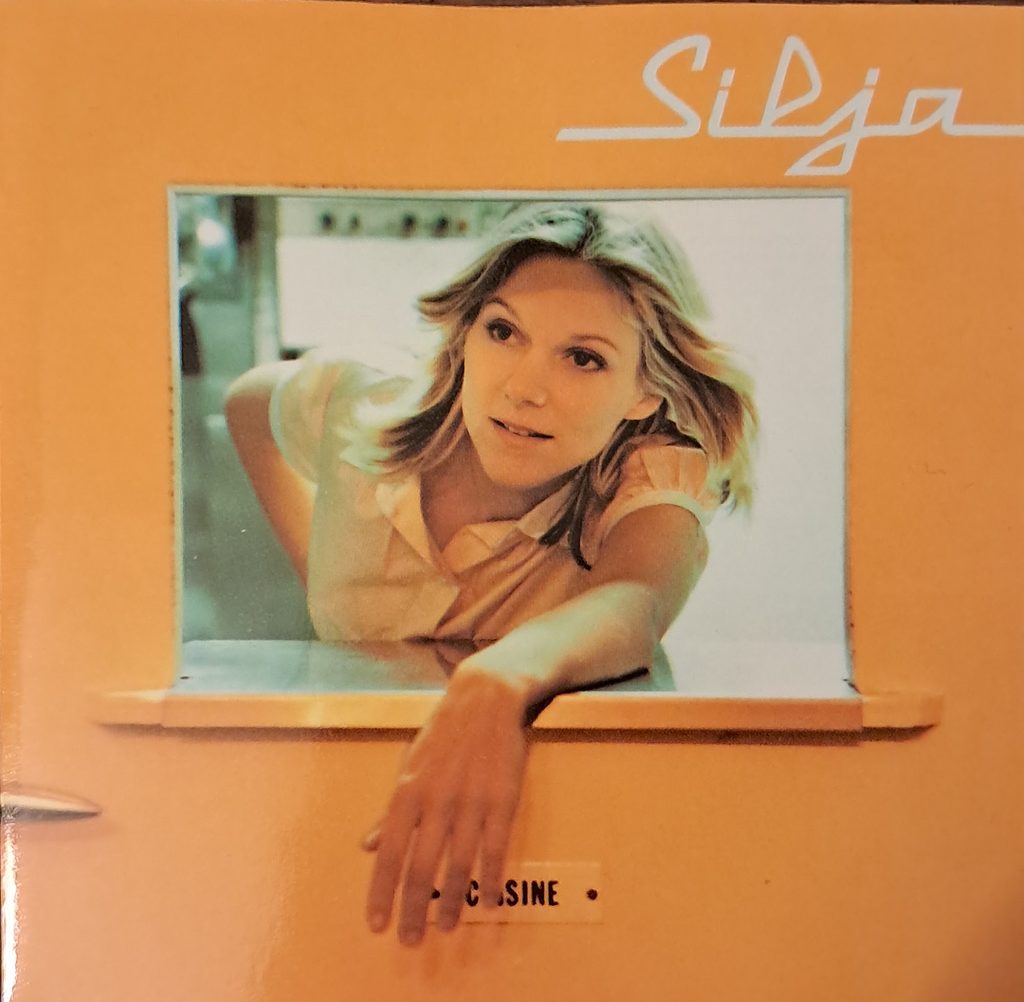
The album opens with a song called “L’affaire du mental,” and before the intoxicating track even reached its first chorus, I was already in love with it. The production was, in a word, gorgeous. More importantly, it didn’t sound like anything I’d ever heard before. It was dreamy and hypnotic, yet it didn’t rely on the overwhelming bass that characterized much of the electronic music beginning to emerge in the United States. It was certainly upbeat, but it wasn’t what people today would call a banger. That said, several other tracks could probably qualify as bangers, particularly the singles “J’efface et j’oublie” (“I Erase and I Forget”) and “J’arrête de fumer” (“I Stop Smoking”).
What’s especially remarkable about Silja is how contemporary it still sounds today. Granted, perhaps it sounds a tiny bit dated, considering it’s already 27 years old, but compared to how much music from 1999 has aged, I’d argue that it could easily pass for something released within the last several years. Trust me, if you enjoy electronic pop in the vein of Björk and Air, you owe it to yourself to hear this album. It might not be easy to track down a copy, but I promise it’s worth every penny you might spend on eBay or wherever else it turns up.
It’s easily one of my favorite albums of all time. Over the years, I can’t begin to tell you how often I visited Amazon France and other music retailers, hoping to discover that Silja was finally releasing a sophomore album. There were stretches when I must have checked for news at least once a week. I simply couldn’t understand why such a remarkable debut had never received a follow-up.
Naturally, that’s one of the many subjects I wanted to explore in the following interview. As it turns out, Silja’s real name is Celia Gruss, and she’s spent the past decade living in Miami Beach, where she has pursued voice dubbing and acting.
If you’re a fan of the acclaimed French cover band Nouvelle Vague, chances are you’ve already heard Silja without even realizing it. She contributed two songs to their debut album: Modern English’s “I Melt With You” and A Flock of Seagulls’ “Wishing (I Had a Photograph of You).” She returned for their second album, singing Heaven 17’s “Let Me Go,” and appeared on their third album with a rendition of Simple Minds’ “The American.”
I actually saw Nouvelle Vague on the tour supporting their third album, and I’d be lying if I said I wasn’t disappointed that Silja wasn’t among the singers. The show was excellent, of course, and I’d had absolutely no reason to expect her to be there. Nevertheless, I had really, really hoped she would be.
So, when the opportunity finally arose to interview Celia over Zoom, I couldn’t resist beginning our conversation by holding up the very same Silja CD I’d purchased in Paris back in 1999.
MM: I have your CD right here. [I hold it up.]
CG: Oh my God, I can’t believe it. It’s so nice. You are a real, passionate music fan.
MM: I bought it in Paris the first time I went in 1999.
CG: Yeah, that’s when it came out.

MM: You told me you’ve been living on Miami Beach in Florida since 2016. How did you end up in Miami?
CG: Well, I had seen the terror attacks in Paris in October 2015. I walked out in my living room and I said, “We’re gonna get shot on terraces.” And 5 weeks later… we were shot on terraces with the famous November ‘15 attacks. And I had my ticket for Miami. I had started to go into dubbing for television series and did two good master classes in that domain. Because the music industry was really changing. I’d done Nouvelle Vague, which was great, but I wanted to try something different. And so I said, what can permit me to do some dubbing, for example, and pivot? And I looked at Miami, and Miami was thriving already 10 years ago. And so I went over here and I passed an audition for dubbing. And I said, you know, it’s time. It’s been 25 fabulous years in Paris, but honestly, there was a convergence between my mother getting old here on this side of the pond in Georgia and there not being real interesting music work for me. Also, in dubbing, they were saying, “Oh, you have a little bit of an English accent when you’re speaking French.”And then I’d say, “Mais non, pas du tout” and they’d be like, “Well…” And they were very tough with me, but I had those masterclasses–I had the experience–and I was sitting in dubbing sessions every day. I was like, this is an opportunity.
MM: Sure.
CG: I have the three aspects, right? No more real work for me in Paris. A political change that really was not working out for Paris–and we can see it today. And, my family. So that touches, work, politics and family–my mother’s getting older. So with the convergence of all of that, I just understood it was time, but it was hard. Paris is where I grew up. I’m born in Paris of a French father and an American mother, so I spent most of my life in Paris, and it wasn’t easy. But not only because there was great work opportunity for me here–I wanted something completely different. I wasn’t gonna go to another city like New York where you could hear French in the city, or London, you can hear French. And I’d lived in London for 2 years. I’d done LA. So I was like, what’s going on in Miami? And I think it was right, because it is one of the most thriving cities today.
MM: Do you find the political situation in the United States today bothersome?
CG: Yeah, it’s a challenge, just because on either side, not much gets done for we the people. Let’s remember that the Founding Fathers created this most extraordinary Constitution. But it’s hard to get what we the people want to have done, which is–for the average Joe–more opportunity. Although, they are working on bringing industry back in the U.S, and that takes a long time for it to install. Just today, I read that we are at 4%. chômage, the French word for people out of work. So, that’s a pretty good number when you compare to other countries. But we have challenges that everybody has. So yeah, again, it’s a conflict. It’s it’s this perpetual conflict.
MM: When I bought your CD in Paris, I had also found the single for “How Could I Find Love.” I was wondering if you could talk a little bit about the singles that you released before the album?
CG: Sure. I was so blessed. I went back to Paris at the age of 22 after four years of college and I was just distributing newspapers in front of fashion shows in August ‘92. And a photographer came up and he said,”What’s the deal?” And I said, “Well, I’ve been jamming with Ben Harper.” And he’s like, who’s Ben Harper? Well, yeah, Ben Harper hadn’t put out an album yet. But I was out there in California jamming with him. And, long story short, I met my producer–it was August 1993–and he said, “I got a song, you wanna come try it?” And I said, “Yup.” And so the song was done outside Paris in a home studio. I had come from multiple different kinds of music. Blues, rock and also pop. So we mixed that up in the voice and wanted to do a more of a rock voice with this electronic pop song. Why? Because we had a lot of trouble going on French radio. They were creating quotas where I think it was 40% had to be French music. So the only way for us to get on the radio was to go through clubs. So we were doing electronic pop songs so that I could sing in the clubs and then get on the radio. “How Could I Find Love” was a great surprise. I signed with Marc Lumbroso at Remark Records, where Vanessa Paradis was signed to. So it was a cute little record company and we loved our head of artistic, Jean-Pierre, who was wonderful. And they just let us do what we wanted to do. We got on the Top 50, which is the top 40 equivalent in France. It was really exciting. I toured every weekend in the clubs. Within two months, I was singing in front of 17,000 people for Dance Machine at Bercy Stadium.

MM: Wow.
CG: Yeah. So in a few months, I was up there, propelled, and that was live on M6, the TV channel as well. So, we did well then we went on to do “Time for Eternity,” which was very melodic, and pop, and club, so that I could still promote it through the clubs. I would have to wait sometimes [until] one in the morning to go on stage. I had two songs, so I did “How Could I Find Love” and “Time for Eternity,” and then somebody like Corona would go up, you know, with “This Is the Rhythm of the Night.” And we were a whole group of cool cats working hard in these clubs. And then we drive back to Paris at like four or five in the morning in the middle of the night. I remember that was a wonderful ground for me to work, day in and day out. During the week, I could rest, but I was always on my guard to be physically fit for the weekend to be on stage. And then we did “Flesh and Fire.” I loved that song. Very speedy. We were noticing that the BPM was going a little bit faster so we challenged that. And I did a few TV shows with that where they would have different singers come on. I remember there was one TV show where they were in the south of France on the beach and I got to go down to the TV station and get on stage with the ocean in the background. It was really, really fun. It was the beginning of electronic pop. The U.S. hadn’t even gone into this domain, apart from the underground. It was underground club music in the late 80s, early 90s. But we were making it more general, so it was on the radio. We were a little bit of the precursors. I remember bringing my records over, and they’d be like, oh my gosh, I love that, how come we don’t have that here? And we know what happened after, starting around 2000s, it just went boom.
MM: Exactly.
CG: And then what happened was the boss, Marc Lumbroso, went to Polydor London. They asked him for a job there. And then my artistic head decided to leave for Universal, so we were kind of like bummeroo, and our other artistic who was doing the covers, Sophie Bramly, left too. So we had a new team come in, and we did have material for an album. And he just wanted French, all French, so we were disappointed, and we were free to leave, so we took a couple years to three years and then one day, I just came up with this melody. [sings] “Oooh oui, j’efface et j’oublie…”
MM: Nice.
CG: But it was in English. I came out of a French movie about this girl who just had obstacles, and I said, there’s so many women alone between 18 and 30. And they work and they work. They try to run the wheel and young families aren’t being created like before. They are very alone in the big cities. And they’re sometimes far away from their family that live in the country, trying to make it in the big city, and I kind of felt like that. I had lonely moments. But “Erase and Forget”–that’s what it was in English. I had I wrote all the examples of a bad day. And then my producer said, “Well, the quotas are still there. How about we try and work on translating that into French?” So we did that and we had different versions then Warner WEA called us. And they said, we hear you’ve got something. So we came in, we had them listen to it, and they said, “Well, we want it. And we’ll wait for an album. We trust you.” It was so nice.
MM: So is that when you started making the album at that point?
CG: Yeah. So we’re like, okay. And “J’efface et j’oublie” had so much air time. The video was so successful. It was great. And yep, started working on the album, which took us over a year. And again, we worked in an apartment in the north of Paris with a really gifted guy called Peter. He wrote most of the melodies. He was–and is still–a true artist. He sent me something a month ago. I said, “You got a hit!” He’s so gifted. And with my producer, we were the three of us, and it was day in and day out, and it was wonderful. I would get up in the morning and I would walk down Montmartre, where I lived, every day, and I would swim for a half hour. I had this rigorous health agenda. Because when you’re a singer, you’re always afraid you’re going to lose your voice. So, then I’d have lunch, and I’d go over to the studio at 2, 3, 4 in the afternoon and we’d work till about 8 p.m and then we’d have the dinner, the three of us. Because we were in the north of Paris, we’d either have Moroccan or Chinese. It was very cheap and it was very good. And then we’d work till 12, 1 in the morning. It was a great, creative time. And he was working on an Atari. Atari, not even the Mac. “Roll the Dice” and “Rough Winds” were done on a Mac in Holland but the rest was done on Atari.
MM: Like the video game company, right?
CG: Yeah. And I would sing in the closet with the clothes. You know, it was roots. But it was a wonderful experience.
MM: You were singing “J’arrête de fumer” at a time when a lot of French people were still smoking. Was that controversial at all?
CG: No, not at all, because the moment we put that out as a single, the French government was doing a program to help kids be informed on smoking. Not the majority anymore, but so many French, when you go back to Paris, they’re still smoking–and the young kids are too. And it happened to me. And I was always so frustrated with that tobacco addiction, so I wanted to talk about that and how frustrating it is. And then the French government did a campaign and they played my song on this.
MM: Wow.
CG: [They played it on the] TGV fast train going up to Paris from the south of France. Then we had an appointment at the Senate regarding helping young kids avoid starting to smoke. That was cool. For the video, it was really hard to get a director to have a good idea about smoking. I mean… so many different crazy ideas, like, she’s lying in an ashtray and it’s turning around with a camera above. I was like, no, no, no. And we kept turning away these things. Then this director proposed the video that we have it with a lot of smoke. But I think that we should have kept the original version because when we did the single version we did a remix and we put that out.
MM: I have that single, too.
CG: Yeah, nice, nice. Well, I think my producer was tempted to make it a very radio edit. We were just trying to get on the radio so bad and we weren’t going through clubs now.
MM: Sure.
CG: So, I had the help of M6 Channel putting on my video but he wasn’t putting it on as much as “J’efface et j’oublie.” So one night, I went to a club and saw that he was there. And he saw I was there and ran out the door. I ran after him and he got on his Vespa. And I said, “Hey, Alex, why aren’t you putting my video on?” He said, “You didn’t keep the album version! You did a remix!” And I’m like, oh my god! I know. I get it. You don’t change a recipe that works and we should never have done a remix for that, but I didn’t get the last word on that. That’s when you’re young, you get a lot of experience, and you have to trust your gut.
MM: So how come you never made a follow-up after the album?
CG: Because, actually, once again, just like Remark Records, the boss left. The boss left at WEA Warner. She left for Orange Telephones. We were really understanding that the record business was changing. We were not selling records as much as we were before. And it was kind of hard for me to do live stuff because it was just me and Peter and my producer. We were radio, radio, radio, radio. And it was hard to get on and the boss left. And what’s funny is that a couple years later, Nouvelle Vague came, and I knew Marc Collin from Fabrice, my producer, and he reached out. He did his first album, Nouvelle Vague 1. And said, what I’m doing is cover songs rearranged in Bossa Nova, and I want you to do “Melt With You.” And it was so interesting. I went in and I did that so fast. It was so good.
MM: I loved that.
CG: And I remember being so comfortable doing it for radio shows. And I was so happy and he asked me to do the second album. And then on the third album, I did “The American.” So, that was a great experience. Then he changed the concept and took famous singers with unknown songs. And it didn’t do as well.
MM: They just put out a new album. I don’t know if you know that. It’s an album of Depeche Mode covers.
CG: Yeah, it’s cool. I do. So he understands that that recipe really works well. In fact, didn’t you notice so many people started to do covers?
MM: Yeah.
CG: It was a great. I felt very privileged to be part of that. Those first three albums, they’re wonderful. I wanted to tour, but he could only choose two or three girls. So, of course, he was going to choose his wife and then Camille, who was wonderful. And then Camille did her album, Cami, and then he chose an Australian girl. And another one. I forget her name; a brunette who’s still touring with them.
MM: I saw them live in Boston about maybe 15 years ago. I know Mélanie Pain was one of the singers when I saw them.
CG: Exactly. It’s Melanie. And I think Melanie’s still with him. Still touring. Yeah, I was kind of upset when they were doing “Melt With You.” I was like, hey, wait a minute, buddy. But he teased me because he said, “Listen, ‘Melt With You’ and ‘Let Me Go’ were taken for television ads and you’re getting a cut with that, and you don’t have to move from your house.” I said, “But I’d love to do it live.” So, I surprised them when they were in Dublin and ran up on stage. That was fun. Maybe I’ll have another chance to work with them again–it would be great.
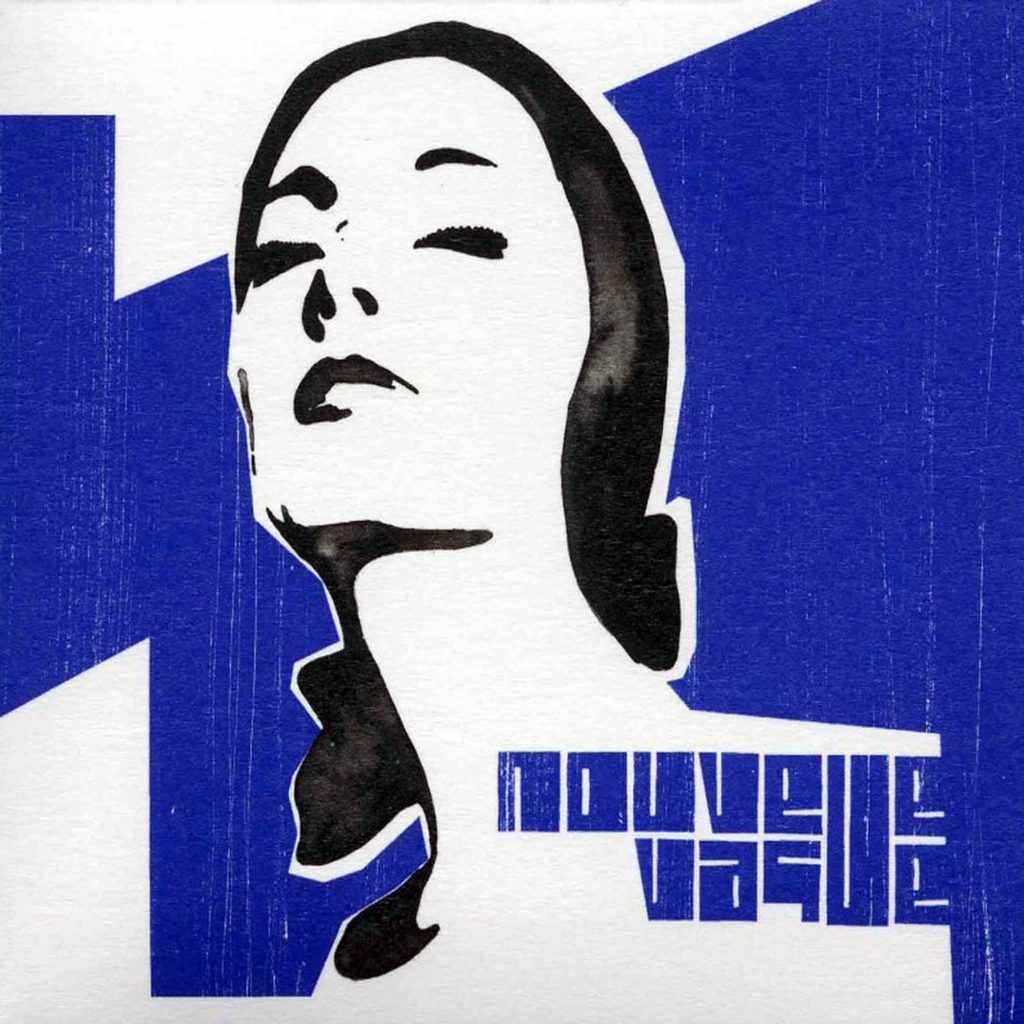
MM: Yeah, that would be awesome. You also did “Wishing I Had A Photograph of You” with them, right?
CG: Yeah, you’re right, exactly. That was on the first album. It was on a special edition of that first album. That turned out really good too. I was surprised that wasn’t as easy and fluid as the other ones. I had to work a little bit on that. But these recordings were pretty smooth, easy work. I mean, two or three takes, finding the harmonies.
MM: Do you ever think about making a new album?
CG: I don’t think about that. But I have been missing doing music again. I would love to be part of, for example, a Nouvelle Vague album. I’m not sure about touring again. But I’ll tell you what–what I’d really like is to write in the background. Music for other people. For other young artists. The competition is something else, but maybe in 2027. There’ll be some surprises.
MM: Well, maybe you could do something like how Mylène Farmer wrote the first two albums for Alizée. Maybe you could find someone like that that you could work with?
CG: Yes, I love to work with people. I don’t work alone. I bounce off [of people]. But do that then do background vocals and harmonies. There was a moment for being upfront and there was a moment for pivoting. So, do music, but in a field that’s different than being upfront. It’s pressure, too, being upfront, you know?
MM: So when did you start acting?
CG: Okay, so, when I was in high school, I was doing musical theaters. And I loved it. And when I got here after doing dubbing I did my first website. I accumulated all this information. And then I decided I wanted to get an agent.
MM: Sure.
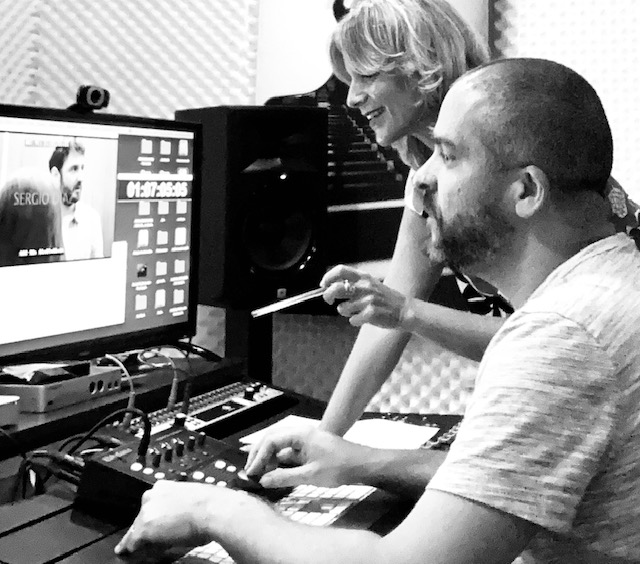
CG: So I went to Talent Direct Agency. I walked in and I said, I want you to be my agent. And they were like, okay, you got some pictures? I said, “No, you got a photographer?” And within a week, they had a photographer. Within a year, they had 5 short films, because they proposed for me to go to film acting classes, which I loved. I’d always sit in that front row every day. And then I said, “Okay, now sell me. You got this. Let’s go.” And I did commercials. I did two theater pieces, one at the Fillmore here on Miami Beach. I did one play in English and one in French. And then, COVID came. And everything changed. For castings for film and commercials, we had to start learning how to self-tape and self-edit and send all this stuff. I was frantically trying to learn how to do that. Meanwhile, realizing how much the competition was intense for film. And it was starting also in commercials. Blondes with blue eyes were getting less hired for commercial work as well. And so we have here in Miami, mostly Latinos, Black and Asian now. So that really diminished. But acting was great and a challenge. I say was, because I decided to leave my agent last year after 8 years. For different reasons. My first is that I had a health issue and got extremely tired from my health issues. So I had to stop. Also, my agency was hiring so much new talent that it wasn’t the wonderful little talent agency that I knew. So I decided to take a sabbatical and actually just take care of my health.
MM: Sure.
CG: And I’ve done well. But also, be involved with my neighborhood and the association. I created and helped bring a French market to my neighborhood and all of Miami Beach. I started to get involved in what’s happening locally here in our local politics. And it was fascinating. You know how they say if, everything goes crooked, first take care of your garden? So I am involved in my neighborhood. And how to help. To help create a better atmosphere and be on top of what’s going on.
MM: Can you talk a little bit about some of your acting roles that you did?
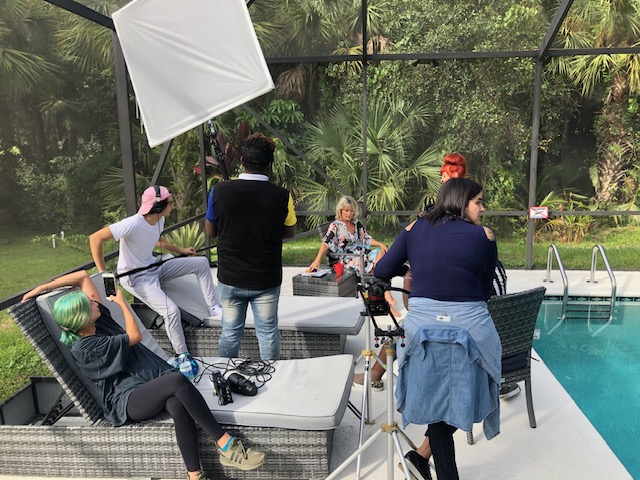
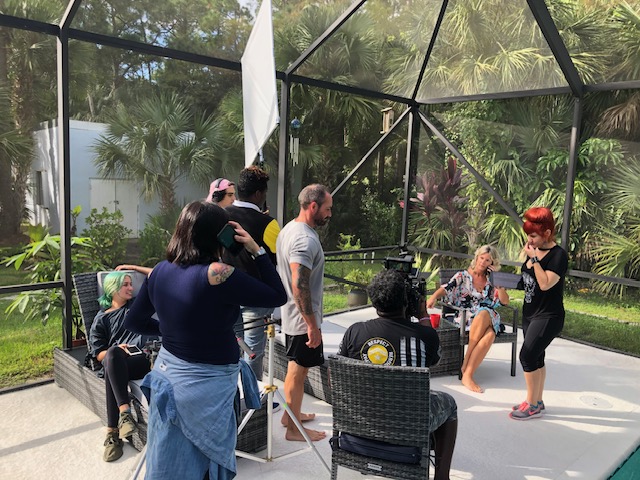
CG: The first one was a short film. And it was really a story of a mother who’s a junkie, and who’s going to lose her child, who goes to the social services, and she gets refused. And it was so well received that it really motivated me to do others. I worked with the King’s Academy in West Palm Beach, and they’re incredible. They are a Christian school. And their studio is like a Hollywood studio. They have a lot of economic support to create it. The teacher and coach is amazing there. So I’ve been able to do three different films based on the Star Wars series. People can follow that and we have a huge following on YouTube. And it was exciting. I had three completely different roles. How can I describe it? One was an airport worker. Another was a little Jedi. And another was the Star Wars co-pilot. And I’ve never worked with nicer people. It’s extraordinary. All these young talents that want to do film professionally. Yeah, it was amazing. In West Palm Beach, maybe an hour and a half north of here. So honestly, it was beautiful. Beautiful conditions to work in.
MM: Were you a fan of Star Wars before you did those roles?
CG: Yeah, I was a fan, totally. And I loved the music. I had seen a documentary about how the film was nothing before the music came in. I love both, naturally. No, acting has really been a discovery. For the theater, for the French play, I was a kind of bourgeois girl. And then the other was a two-person play. 72 pages I had to memorize. 72 pages! Now, that was a great experience. I think that I like theater more than film. But film is also just raw, putting some raw emotion out there. Memorizing the lines, I think, has become challenging with time. Famous actors often say, we’re not being paid to act, we’re being paid to memorize lines. It’s the tough part.
MM: Yeah, good point. I also saw that you did a thriller called Deadly Night Out. What can you tell us about that one?
CG: Yeah, I loved that. And they weren’t able to finish it. That’s why I didn’t talk about it. But I was actually the murderess. It was filmed in Jupiter Island. We rented a house for a week. And it was a real pro, real great experience. I do have a snippet of it in my reel. But it never came out because they had time pressure and the producer was not satisfied with the direction of the film. I called him again 6 months ago. I said, “What’s going on? When are we gonna finish it?” And he went, “Oh my goodness, the director should have everything, and I’m in an argument with him.” You know, productions, how they are, we start great, and then sometimes there’s conflict. And, unfortunately, we couldn’t put it out. But I said, “Well, I still want a snippet for my reel.” Maybe we’ll get that done one day, but, for now, it’s on pause.
MM: On Internet Movie Database, it says you have Knights of the Old Republic coming out next year.
CG: Yes, thank you so much for looking this up. It’s just so nice to know there’s somebody who’s following me. Yeah, that’ll be exciting. And there’s always a premiere In West Palm Beach. Filming that was great, although he changed some of the dialogue on us a week before. So that was challenging. Because when you imprint dialogue and then you have to adapt when it changes last minute, that’s tricky, but everybody was super professional. The makeup took a long time because I had these pink horns.
MM: So, are you just focusing on your health right now, or are you planning to get back to acting at some point?
CG: I’m not ready to go back to acting tomorrow, but you know what? I’m finishing up the year with what I need to do, which is finish up on [my health]. It’s my thyroid, so I have to follow up on that. Actually, what we have to do is work on slowing down and avoiding too much stress. But it doesn’t mean I’m not busy. Every day is so busy. There’s always so much to do. Just staying on top of what’s happening in Miami Beach and in my neighborhood. It’s a great challenge because it’s a whole new array of work and direction and vocabulary that I don’t know, but I felt like it was good to take some time to also make sure we protect our neighborhoods. And all over our city and our island of Miami Beach. I’ll tell you something, my whole life has been about meeting people. And so if tomorrow I ran into somebody who would talk to me about a new project, I’d be up for it because I’m feeling so much better. Social media never really got me much work apart from one TV series, which I loved. It was Dark Waters. That was for the ID Channel TV channel. I had lead role and it was 5 days filming. I was out in the ocean here. Social media helped me to get through to the casting director and say, “Hey, thanks for looking at this second casting.” They paid attention, and that was really a thrill.
MM: What names do you go by on social media?
CG: Oh, Celia. Celia Gruss.
MM: How did you come to use the name Silja back in the day when you were doing music?
CG: My music producer had worked on the three Enigma albums. And Michael Cretu, who did the music there, we were trying to figure out a way of how to use my name, Celia, and he took a block of paper and a pen. He said, “Well, if you spelled it like this with an S and a J, it visually looks beautiful.” And I said, “Okay, but they’re gonna pronounce it Sil-ga.” And he said, “No, you can just tell them that’s not how it is.” And so I said, “Okay.” I was young, right? Like, okay, I like your idea, I like the visual. And that’s how it came to S-I-L-J-A, and then after it was a lot of work to try and explain to people that this is how you pronounce it, Celia.
MM: When was the last time that you went to France at all?
CG: I did go this summer because my music producer Fabrice, he has another health issue. And so I just went for literally two months, which is the longest I’ve ever been since I’ve been here. And it was good for me to be there because unfortunately he fell and broke his arm. So I was going to the clinic every day to make sure he wasn’t alone and you know how Paris can be in the summer. People can be left alone because all the French go on holiday.
MM: Yeah, when I went to Paris the first time, I arrived the last week of August. And I remember it was so quiet. There was nobody around. And then all of a sudden, September 1st, it’s la rentrée (the return), and everybody came back.
CG: Yeah, it’s wild, isn’t it?
MM: Yes.
CG: Well, now it’s less like that. But imagine in the 70s and 80s. I mean, it was so drastic.
MM: Right.
CG: Well, I loved it, because it’s not so radical now in August. There’s still people. And shops are open. And I had a lovely time and I’m glad I went. It breaks my heart to see it in such a difficult state today.
MM: What do you think about the protests that are happening? Are the people who are protesting on the right side, or were they actually doing something you would think is wrong?
CG: No, I think it’s been so long that the school institutions have had so many obstacles. And they are real. There are over 40 students in a class. And that the buildings sometimes are let to degenerate. And then you have tough competition, where maybe you have 300 students and 30 pass to go up an echelon. I don’t remember, but I’ve been listening, and so it’s definitely legitimate. The problem is that other groups jump on the bandwagon. And take advantage of the people who are sincerely hurting. And it’s just been dragging on for so long. And I will never legitimize the violence that there is. It’s just so sad, and it could get really out of control. It already is, but, I mean, the day that the police is not there, you know, it all falls apart quite gravely. There might be a state of emergency.. We don’t know. We have elections in France in late April, early May. We’ll see, but it’s been going on for so long. It’s an accumulation of all these different configurations of different kinds of problems.
MM: Do you think that the government is capable of solving any of the problems?
CG: Not today. No, I think they’re in for some real, real tumultuous times.
MM: Well, I think we’ve covered everything I wanted to ask you about.
CG: Oh, nice. This was so nice to meet you, to know that there’s a fan out there that’s just been listening, And what you were saying, when you put [my album] on, it’s still quite current.
MM: Yeah, it still holds up against the current electronic music.
CG: Yeah, it does. And it’s simplicity. And we made sure we had real songs–verse, chorus, bridge. And that was a great challenge. And we had fun doing it. There are some wacky songs in there, you know? We just had fun.
MM: One of the things I like about it is how not all the songs sound the same. There’s variety.
CG: Yeah, we finish on a rock tune.
MM: Sure. Oh, I know one other thing I did want to ask you. Who are some of your favorite artist? And who are your favorite French artists?
CG: Oh, I loved Michel Berger, a real composer–a fabulous composer. I liked Véronique Sanson for real. Again, composer. Well, Michel Berger actually produced that first album of Véronique Sanson. I like Mylène Farmer’s album. You know, the one you put up on your website.
MM: Anamorphosée?
CG: Yeah, it’s incredible. For other French, of course, Édith Piaf for her voice. I liked this other French album. I’ve forgotten the name. That’s not cool. But I honestly love Julien Clerc. I grew up with Julien Clerc. And Clerc is C-L-E-R-C, Julien Clerc. He was great. My mom would put that record on, too. And I loved all Indochine.
MM: Oh, I like them too.
CG: Yeah, the 80s, you know, Indochine [were great]. Who else? I didn’t understand Johnny Hallyday at all.
MM: Me neither.
CG: I really didn’t. And then otherwise, I was really into American music. Gladys Knight and the Pips, Diana Ross, and then Sheena Easton–
MM: –I love Sheena Easton.
CG: Yeah, I mean, amazing voices. And Blondie, Criss Cross, had all this different variety, and then I went into rock like Journey and Southern Rock with Allman Brothers and Skynyrd. And then my father was a wonderful, gifted blues player, so Memphis Slim, amongst others. Monk and then Miles. I was all over the place.
MM: A few of the artists I’ve loved that were maybe slightly similar to what you did would be like Ysa Ferrer and Melissa Mars.
CG: Yeah.
MM: And there was a singer who put out an album by the name Elfy. I don’t know if you ever heard that one, but it’s really good.
CG: I’ll write it down. E-L-F-I-E?
MM: E-L-F-Y.
CG: Oh, okay.
MM: One of the songs was called “L’Astronaut and la princess.”
CG: Oh, how cool. I love the title. You know, we also had those groups like Air and Daft Punk. They were doing that just around the same time we were doing the album for Warner. These artists were coming out big time.
Visit Celia Gruss online: www.celiagruss.com
So, there you have it, an interview that I had been wanting to do since 1999 from the very first time I heard the Silja album. Special thanks to Celia for taking the time to speak with me and for making one of the best electronic pop masterpieces ever made!

Leave a Reply