
by Michael McCarthy
I’ve been a fan of Nicotine Dolls since their debut album, An Attempt at Romantic, which I enjoyed quite a bit. But after listening to their new self-titled album, I have to agree with something frontman Sam Cieri said during our recent interview: This feels like the first true Nicotine Dolls record. That’s not to say there was anything wrong with An Attempt at Romantic. There are some excellent songs on that album, and I still enjoy listening to it. But the new record feels more focused and cohesive. It’s almost like the songs on the debut were pieces from several different puzzles that didn’t always fit together, whereas the songs on Nicotine Dolls feel like they’re all pieces of the same puzzle, each contributing to a larger picture.
The new album is also noticeably more aggressive and energetic, with a stronger emphasis on guitar-driven rock. But what I find particularly interesting is that there’s still something laid-back, understated, and almost effortless about the way Sam sings many of these songs. Even when the guitars are roaring and the music is bursting with energy, his vocals often retain the subtlety and emotional intimacy that made the band’s earlier material so appealing. It’s an intriguing contrast, and one that gives Nicotine Dolls a distinctive sound.
If you enjoyed An Attempt at Romantic but find yourself a little taken aback by the band’s new direction, I’d encourage you to give the new album a few spins before making up your mind. The songs may be heavier and more confrontational, but the qualities that made Sam such a compelling vocalist in the first place are still very much present. Personally, I think the band has taken a substantial step forward.
As Sam explained during our conversation, that evolution didn’t happen by accident. Following some significant lineup changes, the band made a conscious decision to stop trying to please everybody and instead concentrate on making the kind of music that inspired them to become musicians in the first place. The result is an album that draws inspiration from classic rock while exploring some intensely personal territory, including damaged relationships, betrayal, self-preservation, and the difficult process of learning to stand up for yourself.
I recently spoke with Sam about the band’s transformation, his songwriting process, the stories behind several of the new songs, and what it was like working with Desmond Child and Marti Frederiksen. We also discussed the band’s growing international audience, a previously recorded album that was ultimately shelved, and his experiences performing with the group’s current lineup.
As you’ll discover, Sam isn’t afraid to speak his mind, and our conversation was every bit as lively, candid, and entertaining as I’d hoped it would be.
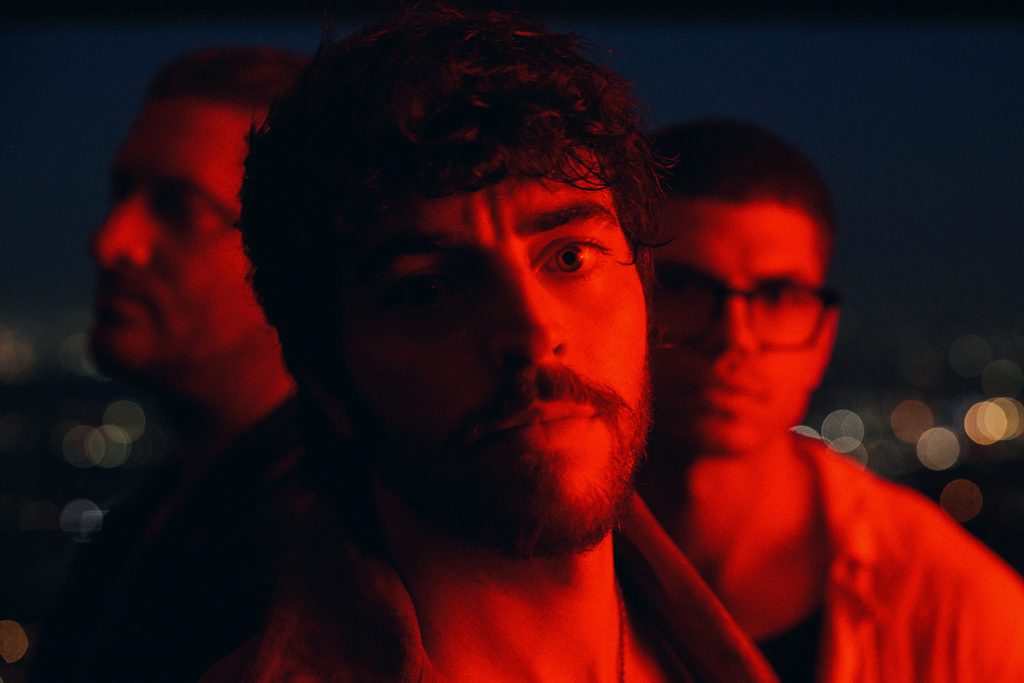
MM: First of all, you’ve described the new album as the first real Nicotine Dolls record. What does the new album express about you that the previous album didn’t?
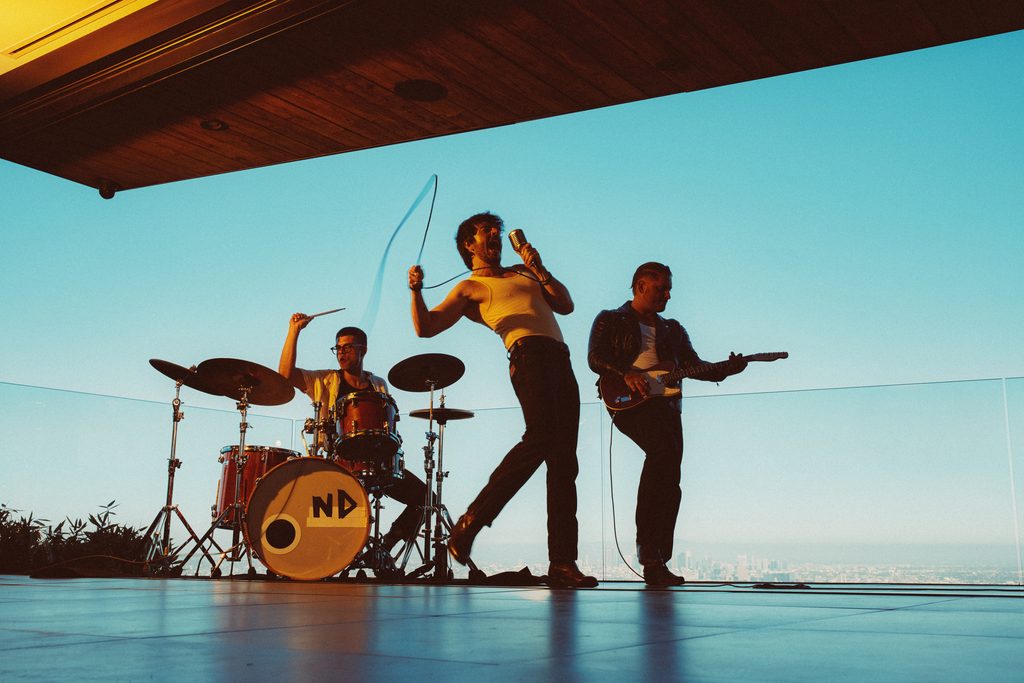
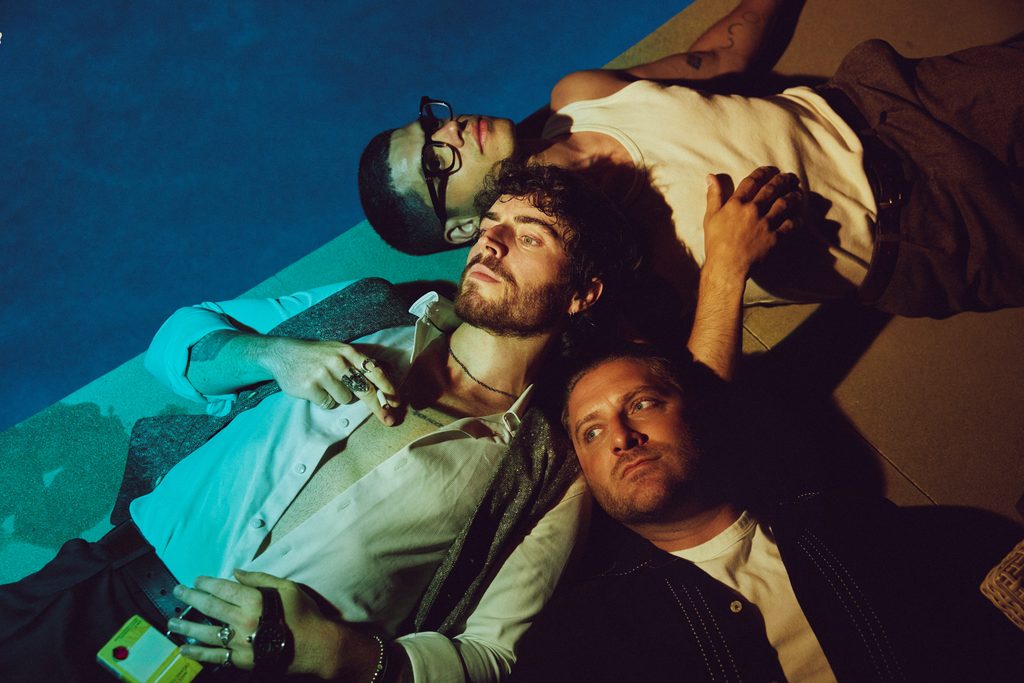
SC: If we’re just looking at the sound of the record, in the past, the band has never really been on the same page before. I think there were a lot of things personally and professionally that we just couldn’t agree on. I also think that we were falling into a trap of trying to please everybody without actually taking our own wants or desires into consideration. If you look at that first record, it is let’s try everything. You can’t hear what that band is. There is no band. There is just an amalgamation of songs. With this new record, we changed the lineup. We brought in people that we felt were on the same page with what we wanted to accomplish. We went back to, why are you in a band? We had to think about whether or not we wanted to keep doing this. And the only way we would keep doing this is to only focus on the music that we love and that we grew up wanting to play. And why are you in a band in the first place? And what we came up with was what the record is now. We have John Newsome on guitar, Alex St. Kitts on bass, and Abel and me, who’ve been here since the beginning. It was a fully formed thing, all on the same page, all chasing the same goal, and all supporting each other. So that’s why it feels like it’s the first actual band record, because it was an actual band that made it.
MM: Are you releasing it self-titled in hopes that some people will just assume it’s a debut?
SC: No, because that’s so easy to find out, if it truly is a debut. I think the self-title, if anything, it’s for us to say this is our first real Nicotine Dolls record for us, and that’s what we needed. We needed it to be self-titled to kind of plant our flag in the ground and stick our feet in.
MM: You’ve said that touring with John reminded you of what made you fall in love with rock and roll music as a teenager. What was it about playing with John that reignited that passion?
SC: His passion. His passion. I’ve never met someone so in love with what they do, and when you have that much joy and confidence on stage… That’s the other thing, he’s the first guitar player we worked with who can actually play guitar. Like, on a level that makes you fall in love with the instrument and everything around it again. He’s so passionate about what he does that it oozes out of him, and then you’re just having fun. And when you’re having fun and you’re enjoying the process of being in a band and being on stage, you end up wanting to follow that as far as it can go. And for us, following that meant not having him being underutilized in our music that we’re currently playing on stage, so we need to think of some things to really let him do his thing. And you start covering Aerosmith and Zeppelin–and we were covering Jet–and him coming in and giving us that freedom reminded us that we haven’t had this much fun on stage in years. And it really ignites when everything lines up, where you’re having fun with people that are passionate and confident, and you’re all aligned. You’re all on the same frequency. It reminds you why the fuck you do this job.
MM: And have you spent much time on the road together yet?
SC: Yeah, we did a big tour last year. We did a lot of little touring in the spring. And then we just came off of a 3-week UK-EU tour, and tomorrow we leave to do a festival in Switzerland.
MM: Oh, nice. How did it go in the UK?
SC: Crazy! We’ve never been there. Never been to the UK, never done the EU, and to go out there and play to sold-out venues… We had three sold-out shows in Germany. Almost 2,000 people in England, which is great, because you never know what the rest of the world is thinking, or if anyone’s gonna show up. But we love the crowds. I think that over there, there’s such an appreciation for music. We, I believe, in the States, we’ve kind of lost our way a little bit on live music. And over there, there’s just a deeper appreciation for it. Great food, too.
MM: Did you have a single go viral over there, or anything in particular that led to the sold-out sales?
SC: No, no. I mean, we’ve had little moments of things kind of working for us [but] I don’t think we’ve ever had a truly viral moment. We’ve had little moments that have built collectively, you know? We had “What Makes You Sad”–that had its little moment because of the TV thing–and then that cover of “Simply the Best.” It was just a whatever cover, just because Tina had passed. And that kind of just took on its own life. But outside of those two songs, everything else has kind of been small growth. There haven’t been any rocket ships. So there is an appreciation for that, in that it’s just been a slow, consistent build, and that’s also where you get surprised that people show up, because you’re like, oh, we haven’t even had a giant thing. People have just slowly found us over the almost eight years.
MM: You worked with Desmond Child on “Here to California,” which I understand was originally “Waiting for California.” Can you talk about how you re-envisioned the song with him?
SC: When we went into this record, “Waiting for California” was one of the first songs that I went into the record with, and I didn’t feel that it was right. I think some artists maybe have a chip on their shoulder about working with other writers. I think it’s a really good way to challenge yourself and challenge your ideas. So, I had this song. I had kind of originally modeled it after “Jaded.” I was inspired by that Aerosmith song.
I had known that Desmond had reached out before about writing, and it just never felt right. So with this song, it felt like the right time to reach out. And so we got into a room, and he brought in Marti Frederiksen, who wrote “Jaded,” and had produced that track and a bunch of other Aerosmith stuff. And it was one of the most intense moments of my life. I played the song for Desmond, and he just kind of sat there for a second, then he was like, “Why are you such a weak little showboy?” And I was like, Jesus Christ, that’s an intense thing to hear.
He came in with the viewpoint of, you are so passive in your songwriting? What are you saying on this record? What are you trying to change thematically in your life? What are you expressing in your life that’s different than past work? And for me, it was like, I want to show a more grounded part of my life. I’m at a point in my life where I’m not being as loose with what I take from relationships. That’s a big theme in the record. Saying, like, no, you can actually suck a bag of dicks. People come in and expect you to lay down and take it, and I think I refuse to do that anymore in my life. I refuse to accept that. So he kind of said, this song, you’re waiting for this opportunity. He’s like, what do you actually want to do? And I’m like, well, I want to run away to this romantic idea of something in my head. He’s like, well, then you have to fucking say that. And it was very intense. It was six hours of back and forth. But luckily, that’s where I met Marti. We demoed out “Here to California” and we had such a good time. I was like, do you want to produce the rest of this record? Because I think we work really well together. And he was like, yeah, man, let’s do it.
MM: So you were a fan of his work with Aerosmith previously then?
SC: Yeah.
MM: Was there anything else he had done that you had liked?
SC: Desmond or Marti?
MM: Either or, actually, I’d be curious.
SC: I mean, Desmond’s Desmond–it’s kind of hard to pick. Because there’s so much. The Bon Jovi stuff is incredible. The KISS stuff is incredible. There’s been so many things that you wouldn’t even know that he was a part of. At the time, I was really listening to a lot of Aerosmith’s Pump. I was really listening to Permanent Vacation. Those late 80s, early 90s records, I think they’re really balanced the sound of old-school rhythm and blues and old-school rock and roll with something really specifically contemporary, but only contemporary to them. They really defined who they were. And to define who you are so late in your career… That’s what most people think of when they think of Aerosmith.
MM: Right.
SC: And not to discount anything else. I love Rocks. I love Toys in the Attic. All of those records, but when we first started making this record, we were just non-stop listening to those [80s and 90s] records. So to work with the guys that did it was really cool.
MM: When you write songs, do you usually hear them in your head before you sit down to write, or do they only come to you when you start making an effort to write?
SC: It’s a little bit of both. I’ve started doing this thing now where I write while I’m driving. So if I’m driving somewhere, I’ll just put my phone on and just kind of say out the song, right? I’ll sing out the drums, sing out the bass lines, the guitars and the melodies, and then come back home and kind of piece it all together. But if I’m working at home and being like, I’m gonna sit down, I’m gonna write, I usually have to sit until I find music. I’m always a music-first person. I’ve always tried to be that person that has a notebook and writes beautiful poetry, but I’ve never been able to work that way. I need to hear music. You’re talking gibberish over the music until something just clicks, and you’re like, oh, that’s what the song is. I need to pull that thread until it’s all in front of you. That’s usually how I work.
MM: Do you tend to get more inspiration from music that you like, or from life experiences?
SC: It’s a combination of both. I’ve definitely listened to records that really excite me, and I go, ooh, I want to do that. How did they do that or what were they listening to, to make that work? And then you go and you follow how they got to where they landed on that sound. I kind of went back and listened to music from when I was a teenager, of what I really loved, and what got me into wanting to be a part of music in general as a career. I went back and listened to all that stuff. You can really hear like “Gimme Sympathy”—I’m such a big Jack White, White Stripes fan. And so “Gimme Sympathy,” to me, is a very Jack White song.
MM: I can kind of hear that.
SC: And then, “I’m Right Here” has kind of a Kings of Leon Only by the Night era feel to it. “Drive Away” has that classic Aerosmith 90s sound, that bluesy kind of 3-4 thing. There’s a lot of that, hearing that, and then wanting to just soak yourself in it, and see how you interpret the things that they were listening to and their work itself.
MM: Did Marti co-write any of the songs, or was he just producing?
SC: No, he co-wrote “Here to California.” Because we just changed so much of it and reworked that whole song. So Desmond and him co-wrote “Here to California” with me. But Marti understands songs really well. Sometimes I would play him a song and he’d go, that’s a great song, man. Doesn’t have a chorus. And I go, oh, okay. And he’s like, you should probably go in the other room and write one. And and I would. It was very nerve wracking.
MM: Who was more intimidating, Marti or Desmond?
SC: Desmond. Desmond holds himself… And Marti’s very chill. Marti reminds me so much of the Dude. He’s got that thing, man. He’s just like, yeah, dude. But Marti in a room will just go, just fucking do it, man. He’s like, stop fucking up and just play it. Desmond looks at you and can make you feel this small. He just has that way about him. Because he’s worked with some of the biggest artists of all time. So it’s really hard to stand up to him. He has so much of that confidence and that swagger behind him. It’s really intimidating. But he’s still inherently to his core a very kind person. He just knows what he wants, and if you give him anything else… Don’t do that.
MM: “Enemy” is a particularly personal song that was inspired by a friend blaming you for decisions that had damaged his own life. Did writing that song help you come to terms with what had happened? And does he know the song is about him?
SC: Absolutely, it helped me. And it was kind of an answer to what we had been working with on “Here to California.” I was like, I am gonna go into this, writing this record, and I’m gonna look at relationships, and start to be a bit more combative. A bit more standing up for myself and confident in who I am. And what I’m able to take, and not able to take. And that situation–we were best friends. And then he decided to have an affair and do this thing and blow up his life. And I didn’t even know what was going on. And by the end of it, somehow, he turned around and was like, you know what, I don’t even like you, and we’re not friends anymore. Started blaming me for the position that he had found himself in. And it was a crazy moment. One, because, you just lost your best friend, who you found out was not your best friend. Hadn’t been for a while, had been talking shit for almost a year. And I knew his ex-fiance. We were really good friends and I just didn’t see it coming. And to have someone turn around and leave you with the bag after you watch them completely tear apart their lives and hurt people–I was so angry. I was so angry when I wrote that song. And by the end of it, I was like, I cannot wait to play this every night. And every night we play it, it feels great because I never got to say all that.
MM: Does it feel cathartic? And does he know it’s about him?
SC: Yeah. And he knows it’s about him, and he’s definitely heard it, and I’m very unapologetic about it, because it’s like, hey, this is what you did, man.
MM: Do you think there’s ever any chance that you might reconcile if he apologizes?
SC: No. No, it was so brutal. And so targeted. I’ve watched the people that he hurt struggle for the past year. And he’s continued to do shit in his very distant life that still causes people pain. At this point, I don’t know who that dude is. That’s not my friend. That’s not the dude that I’ve known for such a long time. Yeah, I don’t see that as something that’ll ever turn around, which I’ve mourned and it sucks. You never want that to happen. Lose people like that in that way.
MM: Can you talk a little about the inspiration behind “Punch Drunk Lovin’”?
SC: That song was originally a big rock song. It was kind of like a “Rag Doll” song. And, lyrically, it is very much that. I guess at the time, I found myself in a situation where I felt like I would take anything from that person. Any form of emotional abuse, any form of pain. And it felt like being punch drunk, just getting hit over and over again. You don’t even know who you are anymore. Because it’s just pain and scar tissue. And it worked in the rock song, it kind of felt like one of those Cure dichotomy things, where the music’s doing one thing, lyrics are doing something else. And then, I picked up a buddy’s guitar, and it was in this weird tuning, and I just immediately started playing the riff for “Punch Drunk Lovin’.” And sang those lyrics on top of that. And it broke my heart a little bit. I saw the visual image in my head that that song conjures for me. And it hurt. It was a painful song to write. So much of the record is that kind of bolsterous confidence, in your face. Fuck you to my dad, and fuck you to this friend, and fuck you to this other relationship. And really kind of showing the armor that I’ve put up, and I wanted at the center of the record. “Punch Drunk Lovin’” is the vulnerable part. Let’s take all of that down and show the pain. You can say fuck you and stand up for yourself, and be confident, and have protection for yourself, but that doesn’t mean that you’re not impenetrable.
MM: If I could ask you about one song from the debut album, I really love “Touch the Ground” in particular. Can you talk a little about writing that one?
SC: I love that you love that one, that’s great. I wrote that in a session with Sam Hollander. We kind of got into a room and we were writing as many songs as we can. And I started playing that one, and I was thinking about a friend of mine. They said, I just started seeing this guy and we’re in the part where we’re kind of floating, and I don’t want to come down, I don’t want to touch the ground. They said that. I don’t want to touch the ground, I just want to stay in that floating part where everything’s perfect. So, I started with that. I was listening to that Lizzy McAlpine record at the time, and I really wanted to create that lush, as romantic as possible, but it goes into that up-tempo in the second verse, so it should feel exciting and innocent. It should lift you up off the ground. By the end of it, you should feel like a balloon floating away.
MM: The bio mentions that John actually played a guitar solo till his fingers were bleeding. Which song was that, and did the performance make it onto the record?
SC: I think it’s the solo in “Just Enough.” I think it’s either “Just Enough” or “Wanted You to Know.” But that was because it was a multiple times thing. While we were making the record, he ripped his fingernail. And his fingernail fell off. He played most of the guitars on the record [like that]. He can’t use one of his fingers, so he’s using his other hand. It was definitely an index finger, so you’re held back when you’re doing that, which I actually think is kind of cool. But for the solo for that song, we had done both of those solos like 10 times. We didn’t want to piece it together–we wanted it to be a full take of the solo. And so, we get to the ninth or tenth time. And he is going to town, crunching his teeth, because you have a finger with no nail on it, and he had to take the bandage off, because it kept hitting the string. And it’s just blood on the guitar, and we’re all sitting there, like, God! Oh, my God! And he’s playing the fuck out of that guitar. And so it’s so impressive. But we’re literally putting blood into this record, and that’s kind of cool.
MM: Now that you’re signed with BMG, how has life changed for the band? Do you have more creative freedom, or are there a lot of expectations that come with being signed to a major?
SC: There’s a lot of fear, because you don’t want to be one of those stories. I think that’s why it took time to say yes. It took time to agree. It took time to [see] if this was the right partnership, because it has to be a partnership. We were with another label before that was a really bad experience. This has been a really great experience. We had an entirely other record that we threw out, and they supported that, which is a big deal. To come in and be like, okay, we’ll eat that, and we’ll support you guys going in this other direction, which was very risky for us, to pursue something that felt more authentic, but also maybe would alienate parts of our audience. And they just supported the whole thing. And it has felt more like a partnership than any creative partnership I’ve had in the past with different people. And we live in a time where the record cycle ends the day it comes out, which is heartbreaking. And they have not been treating it like that at all. It’s been very much like, okay, now the record’s out, now the cycle starts. Now we start putting the plan together. So far, I’ve had a very positive experience.
MM: What was the record that you discarded like?
SC: We were still the last version of the band. There was still a lot of discourse on who we are, what are we doing, all these things. We couldn’t agree on anything. And we felt like we were being held back musically on things. I think it was more of the same. Like, let’s try this, and let’s try this. Is this us? There was no confidence in anything, but there are a couple songs. I was just listening to it the other day. It was produced by Peter Katis, who we love, who’s producing a bunch of stuff. He did those Interpol records, Gang of Youths’ records, Swell Season–he’s done a bunch of stuff. He’s an incredible producer. We went to this house and we made this record. I’d say it was a bit more singer-songwriter-y. We were trying, maybe, some like Joshua Tree stuff, so just a bit more ethereal, I guess. But still not being able to commit to anything, because none of it felt right. But there are two songs on that record that I think about. I love these songs still. I want to put them out at some point as an A/B-side because they feel very related. But yeah, it just was It was more of the same, and I just didn’t want to do that.
MM: What have the reactions from people who knew your first album been like in response to your new album?
SC: Mostly good. It’s been mostly like, oh, this is great, we love this, and it feels more authentic. I’ve seen the people and talked to the people that are like, no, this is too much. They wanted something softer, and they wanted something more widely acceptable. For those people, we have that record. You can go listen to that record. That record exists. We’re not getting rid of that record. It’s still there for you. I think your job as a band is not to please everybody, and it’s taken a very long time for me to realize that, but your job is to say what you need to say in the way you need to say it. And then leave the rest up to everybody else. Fucking grow and evolve and change. That’s the gig.
MM: Let me just ask you one last question. What are your plans for touring coming up?
SC: Well, right now, we just finished that EU-UK. We have a festival in Switzerland that we’re flying out to tomorrow. And then for the rest of the year, we want to find the right opening act slot. For me, I really like being an opening act, because you’re able to learn. And take in a lot of what somebody who’s ahead of you has done and see how they work. That’s our goal. There’s nothing concrete now. So we’re being very particular and very purposeful with where we do that.
MM: This is just completely random, and I’m nobody to suggest anything, but have you thought about Bon Jovi’s shows next year?
SC: Oh, yeah. I mean, David [Bryan]–keys David–is a friend. We’ve written some stuff together, just in our own time. The first time, actually, I went to his place in Nashville–he has this big piano, and we walk in, and I was like, oh, that’s a nice piano. And he just hits “Wanted Dead or Alive” right in front of me. That was one of the coolest experiences ever. I was like, can you do anything else? And [he plays] “Livin’ on a Prayer.” I was like, God, that’s so cool. I would 100% be down to go out with Bon Jovi. That would be crazy not to.
Special thanks to Sam for taking the time to speak with us and to Luci Paczkowski for settting it up!
Leave a Reply