
by Michael McCarthy
There was a time when I loved watching movies. I went to the cinema regularly, collected DVDs and Blu-rays, and eagerly anticipated new releases. I was even a film critic for various magazines and e-zines. These days? I probably watch one or two movies a month, if that. And it isn’t because I don’t have access to them. With all of the various streaming services I subscribe to, there are thousands of movies available for me to watch whenever I want. I simply don’t have much interest in them anymore.
My friends are always recommending movies to me. They’ll tell me I absolutely have to see something, and I’ll respond that I’ll have to check it out. And I genuinely mean it when I say that. But then the movie eventually appears on one of my streaming services, and I rarely bother watching it.
The problem is that movies just feel too short to me now.
Watching a great television series is like reading a wonderful novel. Watching a movie is more like reading a 20-page short story. Even if the short story is excellent, it rarely gives me the same sense of satisfaction that I get from spending days or weeks immersed in a novel. I want to get to know the characters, understand their motivations, watch their relationships evolve and see how their decisions affect their lives over time. And I tend to appreciate a few surprising twists along the way.
A two-hour movie simply can’t explore all those things with the same depth that a television series can.
In fact, I’ve reached the point where watching a movie often feels like watching an advertisement for a television series that could have been. I’ll find myself getting interested in the characters and their world, only for the movie to end just as I feel like I’m really getting to know them. I’ll start imagining all the additional storylines the writers could have explored if they’d had ten or sixteen hours instead of two. Even when I love a movie, I almost always find myself wishing there was more of it.
Of course, Hollywood frequently makes sequels to successful movies, but those rarely satisfy me, either. Too often, it seems like the filmmakers have analyzed what audiences liked about the original and decided to give them more of exactly the same thing, rather than concentrating on telling a compelling new story. The result is frequently a movie that feels like a pale imitation of its predecessor.
Television series can certainly fall into that trap, too, especially when they’re renewed long after they’ve exhausted their best ideas. Lost, for example, went on at least two seasons too long. And I lost interest in The Walking Dead around season five. But when a series is thoughtfully written and planned out, the results can be extraordinary, serving up a five course meal whereas even a two hour and a half movie tends to feel more like a mere appetizer to me at this point.
I should probably mention that I’ve never been particularly fond of conventional Hollywood romantic comedies or big-budget, Hollywood action spectacles. I tend to find American rom-coms overly simplistic, predictable and, frankly, sometimes downright stupid. And I’ve never understood the appeal of sitting through two hours of Michael Bay-style action sequences where something seems to explode every five minutes. Spectacular special effects don’t impress me much if I don’t care about the characters or the story.
That’s not to say I dislike all American movies or television shows. Far from it. But I’ve generally found that foreign films and series are more likely to offer the kind of storytelling that appeals to me.
Take the German science-fiction suspense series Dark, for example. It’s one of my favorite television series of all time. The show introduces a multitude of mysteries and gradually reveals its secrets, layer by layer. Just when you think you’ve figured something out, another revelation changes your understanding of everything that came before it. Silo, one of my current favorites, is much the same way. The storytelling is remarkably intricate, yet the mysteries are ultimately grounded in the lives and relationships of the characters.
That’s exactly the kind of storytelling I love. I don’t want everything explained to me in the first twenty minutes. I enjoy having to think about what I’m watching. I like putting clues together, questioning characters’ motivations and discovering that something seemingly insignificant in an early episode becomes incredibly important much later.
If there’s one country whose television writers consistently impress me more than any others, it’s South Korea. I absolutely adore Korean dramas, or K-dramas, and I think Korean television writers are among the most talented storytellers working anywhere in the world.
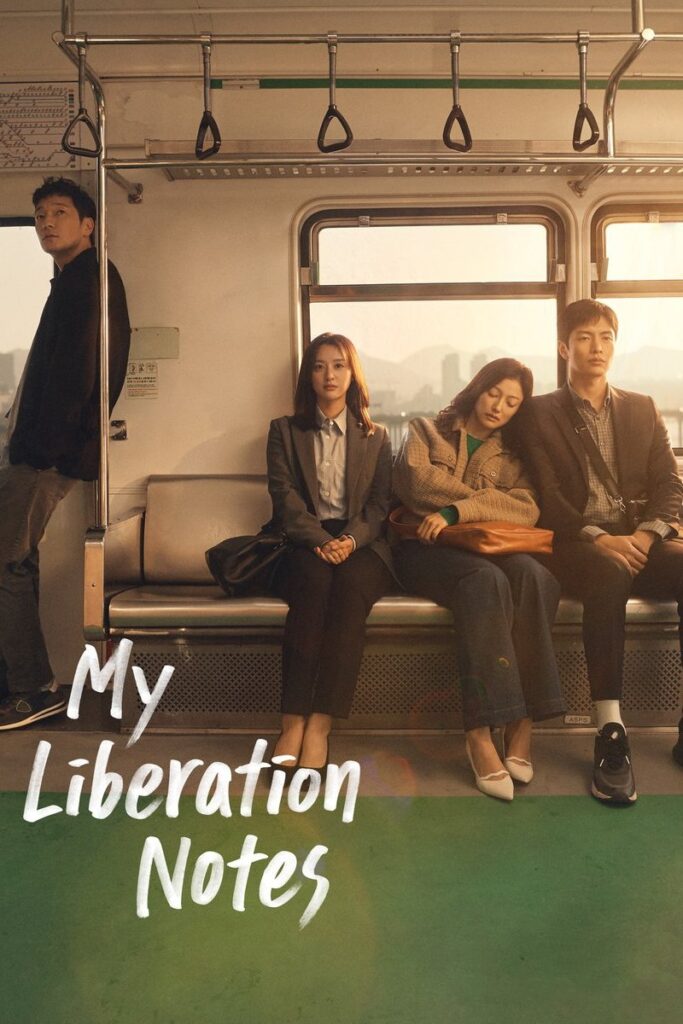
Some of my favorites include My Liberation Notes, We Are All Trying Here, My Mister and It’s Okay to Not Be Okay. These are beautifully written, emotionally complex series that explore human relationships, psychological struggles and the many complicated ways people interact with one another.
One of the things I particularly love about Korean dramas is their frequent use of nonlinear storytelling. Korean writers can do astonishing things with flashbacks, shifting perspectives and revelations about the past that completely transform how you interpret a character’s actions in the present.
And they don’t always feel obligated to spell everything out for the audience. Sometimes a character’s silence, a seemingly insignificant gesture or a conversation that initially appears mundane turns out to have enormous emotional significance.
To me, that is sophisticated storytelling.
I’m also a huge fan of the traditional sixteen-episode K-drama format. Sixteen episodes usually provide enough time to develop a rich, complicated story with an excellent twist or two without dragging it out unnecessarily. You can have numerous characters and subplots, explore their histories and relationships, and gradually bring everything together for a very satisfying conclusion. It’s like reading a really good novel, with each episode serving as another chapter.
Not every Korean drama follows that format, of course, and some of my favorites do have fewer episodes. But I love the general Korean approach of telling a complete, carefully constructed story rather than endlessly extending a successful show for years and years until audiences finally get frustrated enough to stop watching.
I also have tremendous admiration for Korean actors. There’s an emotional intensity and seriousness to many Korean performances that I find especially compelling. The actors often seem completely immersed in their characters, and they aren’t afraid of long silences or subtle expressions that convey more than pages of dialogue ever could. For examples of these, see Song Kang’s brilliant performance as a piano mastermind in Four Hands, Two Sonatas or Seo Ye-ji’s powerful portrayal of a mentally ill author in It’s Okay to Not Be Okay.

That doesn’t mean Korean actors can’t be funny. Quite the opposite! Some of the funniest television I’ve ever watched has come from South Korea. (Like The Sound of Your Heart, Genie, Make a Wish and Business Proposal.) But I often find Korean comedy more intelligent and character-driven than the broad, predictable humor that dominates so many American comedies.
And Korean writers frequently blend comedy and tragedy in ways that American productions rarely attempt. A series can have you laughing hysterically one minute and feeling absolutely devastated the next, without either emotion seeming out of place.
That’s part of what makes these shows feel so much like real life.
I realize that some people might argue that television series demand too much time. Why spend sixteen hours watching something when you can enjoy a complete story in two?
But that’s precisely the point. I don’t want to spend less time with a great story. I want to spend more time with it.
When I’m reading an excellent novel, I’m not wishing it were shorter. I’m enjoying the experience of inhabiting that fictional world, and when I reach the final pages, I often feel a little sad that it’s over.
That’s exactly how I feel when I finish an exceptional television series.
The characters have become familiar to me. I’ve watched them struggle, grow, make mistakes, fall in love, lose people they care about and sometimes completely transform their lives. I’ve spent enough time with them that their stories can stay with me for years afterward.
Movies can certainly accomplish something similar, and there are films that have affected me profoundly. I’m not suggesting that the format is incapable of producing masterpieces. But for me, those experiences have become increasingly rare.
Maybe my tastes have changed. Maybe writing my own television series has made me more conscious of all the possibilities that longer-form storytelling provides. Or maybe I’ve simply become spoiled by the extraordinary television being produced around the world.
Whatever the explanation, I don’t foresee myself returning to watching movies as frequently as I once did.
Give me a complicated German mystery, an emotionally devastating Korean drama or a beautifully written sixteen-episode series with richly developed characters, and I’ll gladly spend an entire weekend immersed in its world.
Because ultimately, I don’t watch television simply to pass the time. I watch it because I love stories.
And when I find a truly great one, two hours just isn’t enough.
Leave a Reply